
How to Easily Remove Salt Stains from Carpet Car Floors
If you have ever spent a long Alberta winter watching your car’s pristine black interior transform into a chalky, white-crusted landscape, you know the frustration of road salt. It feels like a losing battle; no matter how much you kick your boots together, that stubborn brine finds its way into the fibers, hardening into a “concrete-like” mess that refuses to budge. This isn’t just an eyesore that ruins your commute—it is a chemical invasion that can eat away at your vehicle’s structural integrity and plummet its resale value.
In this comprehensive guide, we are going to walk you through the professional secrets to remove salt stains from carpet car floors, exploring everything from simple DIY vinegar solutions to industrial-grade steam extraction. By the end of this masterclass, you will have the knowledge and the confidence to reclaim your cabin from the clutches of winter road minerals.
The Chemistry of Corruption: Understanding Your Adversary
To effectively remove salt stains from carpet car interiors, one must first understand the molecular nature of the contaminants. Road salt is not a singular substance but a cocktail of chloride-based minerals chosen for their ability to lower the freezing point of water through a process known as freezing-point depression. While sodium chloride ($NaCl$) is the most common and cost-effective de-icer, it is often supplemented with calcium chloride ($CaCl_2$) or magnesium chloride ($MgCl_2$) during extreme cold snaps, such as those frequently experienced in Calgary and Edmonton.
The Molecular Bond
When these salts dissolve in snowmelt, they form a liquid brine that seeps deep into the porous structure of automotive carpeting. As the vehicle’s interior heater evaporates the water, the salt ions reach a state of supersaturation and begin to crystallize. These crystals do not just sit on top of the fibers; they form electrostatic bonds with the synthetic polymers (typically nylon or polyester) used in car interiors. This bonding is why a standard vacuum cleaner is often powerless to remove salt stains from carpet car floors once they have hardened into a crust.
Hygroscopic Properties and Hidden Dampness
Calcium chloride, in particular, is highly hygroscopic, meaning it actively pulls moisture from the air. This creates a permanent state of dampness in the carpet padding, even on dry winter days. This moisture acts as a catalyst for galvanic corrosion. When chloride-rich water penetrates the carpet backing, it reaches the floor pan—the steel foundation of your vehicle. The chloride ions ($Cl^-$) dramatically increase the conductivity of the water, facilitating the flow of electrons that converts iron into iron oxide, or rust. The $5 billion annual cost of road salt damage in the United States alone highlights the severity of this chemical reaction.
| Chemical Compound | Formula | Effective Temp | Physical Residue Characteristics |
| Sodium Chloride | $NaCl$ | $-10^\circ\text{C}$ |
White, chalky, powdery crystals. |
| Calcium Chloride | $CaCl_2$ | $-25^\circ\text{C}$ |
Oily, greasy, translucent film. |
| Magnesium Chloride | $MgCl_2$ | $-15^\circ\text{C}$ |
Sticky, stubborn residue. |
| Potassium Chloride | $KCl$ | $-4^\circ\text{C}$ |
Granular and abrasive. |
The Alberta Context: A Regional Maintenance Challenge
In regions like Calgary, the mobility maintenance departments utilize a sophisticated “Road Salt Management Plan” that governs the application of these chemicals. The city applies approximately 40,000 to 50,000 tonnes of road salts annually. For a local driver, this means your vehicle is essentially submerged in a salt bath for five to six months of the year.
The “Pickle” Mix and Traction Abrasives
When temperatures drop below $-15^\circ\text{C}$, the City of Calgary switches from pure rock salt to a mixture called “Pickle,” which consists of 3% salt and 97% sand or gravel. While this provides necessary traction, it introduces a secondary problem for your carpet: physical abrasion. The grit from the pickle mix acts like sandpaper, grinding against the salt-stiffened fibers every time you move your feet, leading to the physical destruction of the carpet cleaning pile.
Beet Brine and Organic Tenacity
Calgary has also experimented with “beet brine,” a mixture of beet extract and salt. The organic sugars in the beet juice help the salt adhere to the pavement longer. Unfortunately, these same sugars make the salt much harder to remove salt stains from carpet car surfaces because they act as a biological glue, increasing the surface tension of the brine and making it more difficult for standard cleaners to penetrate the stain.
The Physics of Restoration: Why Stains “Ghost” Back
A common complaint among DIYers is the “ghosting” effect, where the white residue reappears just hours after the carpet has dried. This is not a failure of the cleaning agent, but a result of capillary action, also known as “wicking.”
The Wicking Effect
When you apply a liquid to remove salt stains from carpet car interiors, you dissolve the surface crystals. However, if the solution is not fully extracted from the deep padding, the dissolved salt remains suspended in the moisture. As the surface of the carpet dries, it creates a pressure differential that draws the salt-saturated water from the bottom of the carpet to the tips of the fibers. Once the water evaporates at the surface, the salt crystals are redeposited, often in a larger and more noticeable ring than before.
Effective Extraction vs. Surface Wiping
To truly remove salt stains from carpet car floors, the cleaning process must move beyond surface wiping. Professional detailers utilize “lift”—the measure of a vacuum’s ability to pull water out of dense fibers—to break this capillary cycle. Without a high-powered extractor or a wet-dry vacuum, you are merely redistributing the salt rather than removing it.
Professional Methodology: Step-by-Step Salt Eradication
If you want to achieve professional-grade results and permanently remove salt stains from carpet car interiors, you must follow a structured protocol that addresses the mineral’s chemical and physical properties.
Phase 1: Dry Preparation and Mechanical Agitation
Never start by getting the carpet cleaning wet. The goal is to remove as much solid mass as possible while it is still in a crystalline state.
-
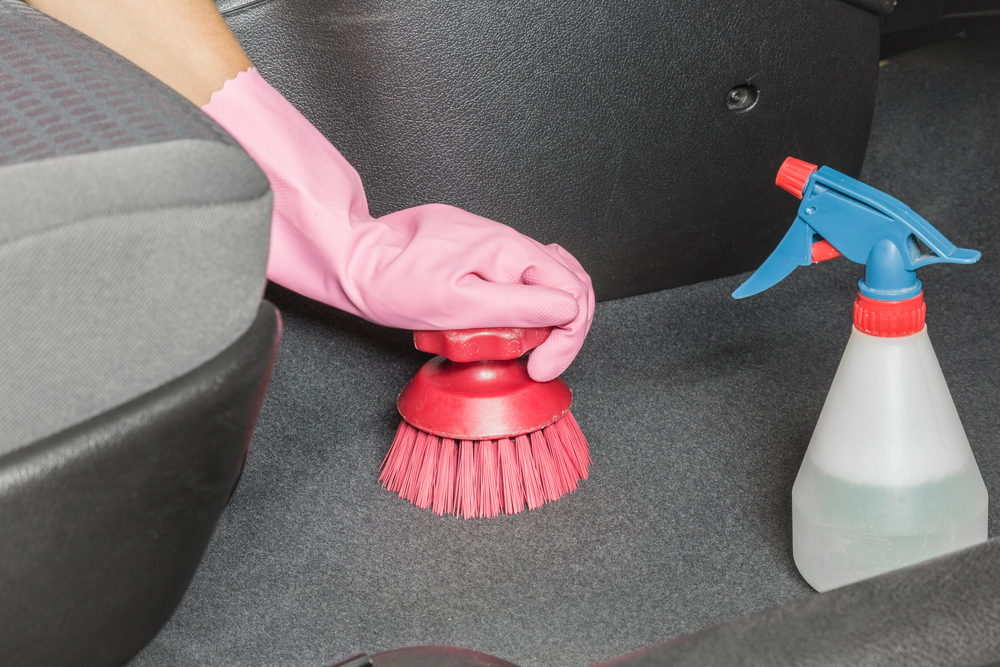
Stiff-Bristle Brushing: Use a nylon brush to break the hardened crust. Work in multiple directions to loosen the salt bonded to the sides of the fibers.
-
High-Power Vacuuming: Use a crevice tool to suck up the loosened salt. Pay close attention to the areas around the pedals and seat rails where salt tends to migrate.
Phase 2: Chemical Neutralization
Because road salt is an alkaline mineral deposit, it must be neutralized with an acid to break its bond with the fabric.
-
The Vinegar Approach: A solution of 50% warm water and 50% white vinegar is the industry standard for DIYers. The acetic acid in the vinegar reacts with the calcium and sodium deposits, converting them into water-soluble acetates.
-
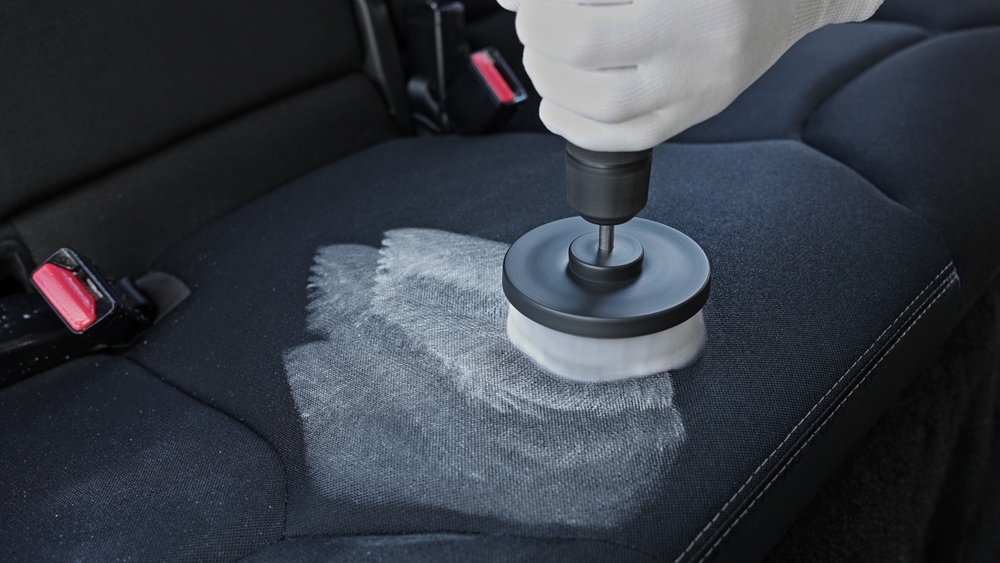
Commercial Salt Chisel: Specialized products like 3D SSX or Silverwax Salt Remover are engineered to be more aggressive than vinegar without the lingering smell. These often contain surfactants that lower the surface tension of the water, allowing the solution to penetrate deeper into the salt “rock”.
Phase 3: Thermal Dissolution and Agitation
Heat is a powerful ally when you try to remove salt stains from carpet car floors. The solubility of $NaCl$ increases with temperature, making hot water much more effective than cold.
-
Dwell Time: Allow your neutralizing solution to sit on the stain for 3–5 minutes. This is critical for the acid to penetrate the core of the salt crystals.
-
Steam Treatment: If available, a steam cleaner is the ultimate tool. The high-pressure vapor (above $100^\circ\text{C}$) melts the salt instantly while the pressure drives the neutralizing agents deep into the padding.
Phase 4: Industrial Extraction
To prevent the “ghosting” mentioned earlier, you must remove the liquified salt from the vehicle entirely.
-
The Shop Vac Method: If using a wet-dry vacuum, press the nozzle firmly into the carpet and move slowly. The goal is to see the water being pulled through the clear nozzle.
-
Blotting: If you don’t have a vacuum, use thick, white microfiber towels. Press down with your full body weight to “stamp” the moisture out of the carpet and into the towel.
| Extraction Method | Efficiency Rating | Best For |
| Microfiber Blotting | Low |
Light, fresh stains; maintenance. |
| Wet-Dry Vacuum | Medium |
Moderate buildup; standard DIY use. |
| Steam + Vacuum | High |
Heavily crusted salt; sanitization. |
| Hot Water Extractor | Professional |
Deep-set salt; restoration of neglected cars. |
Comparative Analysis of Commercial Neutralizers
While vinegar is effective, the market for automotive detailing has produced several high-performance alternatives designed to remove salt stains from carpet car interiors more efficiently.
3D SSX Salt Stain Remover
This product is a favorite among professional detailers because it is fragrance-free and specifically targets the molecular structure of winter road salt. It is highly concentrated, allowing it to be used at full strength for “concrete-like” salt or diluted for regular maintenance.
Silverwax Salt Remover
A Canadian-made favorite, Silverwax is known for its near-instant reaction time. It is particularly effective on the blue-tinted calcium chloride residues often found on Alberta highways.
Chemical Guys Lightning Fast Extractor
While not a pure salt neutralizer, this product uses enzymes to break down the organic films (like those from beet brine or leaked coffee) that often trap salt against the carpet fibers. Using this in conjunction with a salt neutralizer provides a two-step “truck wash” style cleaning that is far more thorough than a single-step process.
Preventing the Return of the White Crust
Once you have successfully managed to remove salt stains from carpet car floors, the next logical step is to ensure they never return. Prevention is significantly cheaper and less labor-intensive than restoration.
The All-Weather Liner Advantage
Standard rubber mats are better than carpet, but they often allow salt-saturated water to spill over the edges and into the footwell. High-walled liners from brands like WeatherTech or TuxMat are laser-scanned to fit the exact dimensions of your vehicle’s floor, creating a literal “bucket” for snow and salt.
Ceramic Fabric Coatings
Modern detailing technology now includes ceramic-based fabric protectants, such as Chemical Guys HydroThread. These products wrap each individual carpet fiber in a hydrophobic SiO2 barrier. This prevents the salt brine from ever soaking into the fabric, causing it to “bead up” on the surface where it can be easily wiped away.
The Impact of Salt on Vehicle Longevity and Resale Value
The push to remove salt stains from carpet car floors is not merely an obsession with cleanliness; it is a financial strategy. The Environmental Protection Agency (EPA) and various automotive analysts estimate that salt-related corrosion can depreciate a vehicle’s value by thousands of dollars over just a few years.
Structural Integrity and Safety
Salt doesn’t just damage the carpet; it compromises the metal underneath. Frame corrosion can lead to weakened suspension mounts and even failure of the brake lines. By keeping your carpets salt-free, you are preventing moisture from being trapped against the floor pan, thereby extending the life of your vehicle’s frame.
The Psychology of a Clean Cabin
There is a documented psychological benefit to driving a clean vehicle. During the dark, cold months of an Alberta winter, a salt-crusted interior can contribute to a sense of “winter blues” and neglect. A clean, fresh-smelling cabin (achieved by using steam or professional shampoos instead of vinegar) provides a sense of pride and comfort that makes the long commute significantly more bearable.
Mastering the Long-Term Winter Maintenance Cycle
To truly remove salt stains from carpet car interiors and keep them gone, you must adopt a seasonal maintenance rhythm. The professionals at Alberta Spotless Clean recommend a “three-point” winter protection plan:
-
The Pre-Winter Shield: In October or November, thoroughly clean your carpets and apply a high-quality fabric protectant. Install your all-weather liners before the first snowfall.
-
The Mid-Winter Flush: In January or February, remove your liners and check for any “overspill” salt. Spot-treat these areas immediately using the neutralization and extraction steps outlined above.
-
The Spring Decontamination: Once the roads are clear of salt, perform a deep-extraction cleaning. This removes the “hidden salt” that has settled into the padding, preventing it from causing corrosion during the humid spring months.
Conclusion: A Masterclass in Winter Vehicle Preservation
In the high-stakes environment of an Alberta winter, the appearance of your vehicle’s interior is more than just a matter of aesthetics; it is a testament to how you value your property and your personal space. We have explored the deep-seated chemistry that makes salt so difficult to manage, the physics of wicking that causes stains to return, and the professional methodologies used to remove salt stains from carpet car floors permanently.
The journey of car care is one of constant vigilance against the elements. Whether you are using a simple vinegar solution to dissolve fresh crystals or employing the industrial power of a steam extractor to melt away years of neglect, the goal remains the same: restoration. You have learned that the white crust on your floor is a corrosive mineral bond that requires chemical neutralization and thermal dissolution. You now understand that without high-power extraction, you are simply shifting the salt from the surface to the padding, where it continues its silent work of oxidizing your floor pan.
But beyond the technical steps and the chemical formulas, there is an emotional component to this process. When you step into a vehicle that has been meticulously cared for—where the carpets are soft, the air is fresh, and there is not a single speck of white brine to be seen—you feel a sense of control over your environment. In a world where we cannot control the weather or the state of the roads, we can control the condition of the machines that carry us through the storm.
Removing salt stains is an act of preservation. It preserves the resale value of your car, it preserves the structural integrity of the frame, and it preserves your own peace of mind. For those in Calgary and the surrounding areas, the team at Alberta Spotless Clean is here to support you in this mission. We provide the expertise and the industrial tools necessary to tackle the most “dickered” carpets, ensuring that the harsh Alberta elements never gain a permanent foothold in your cabin.
As you move forward through this winter and the many winters to come, remember that the “white ring” is not permanent. It is merely a challenge waiting for the right solution. Armed with the knowledge of acidic neutralization, the power of steam, and the protection of high-walled liners, you are now a master of your automotive environment. Take the time to treat your vehicle with the respect it deserves, and it will reward you with reliability, safety, and a pristine interior that defies the harshest of seasons.
If you are tired of the DIY struggle and want to give your car the professional restoration it deserves, do not wait until the salt has turned your floor into a block of concrete. Reach out to Alberta Spotless Clean today and let our experts handle the heavy lifting. We use the most advanced techniques to remove salt stains from carpet car interiors, restoring your vehicle to its factory-fresh glory and safeguarding your investment for the road ahead. Your car takes care of you in the snow—it’s time you returned the favor.