Proven Winter Home Maintenance Alberta Checklist Guide
The residential infrastructure of Alberta exists within one of the most demanding climatic corridors in North America. Characterized by high-amplitude temperature fluctuations, intense ultraviolet exposure, and the unique meteorological phenomenon of Chinook winds, the Alberta winter necessitates a rigorous, multi-system maintenance protocol to ensure structural integrity and operational safety. For the professional property manager or the diligent homeowner, the transition into the cold season is not merely a matter of comfort but a critical period of risk mitigation.
The historical records of the province underscore the volatility of this environment; for instance, the record-breaking temperature shift in Pincher Creek in 1966, where temperatures soared 21°C in just four minutes, illustrates the physical stress placed upon building materials. Such rapid thermal expansion and contraction cycles—known as thermal shock—can compromise roofing systems, fenestration seals, and foundational stability.
The evolution of building science in Canada has produced robust codes intended to withstand these stresses, yet the aging housing stock in major centers like Edmonton and Calgary remains vulnerable to specific failure modes such as “attic rain” and catastrophic pipe bursts. This report synthesizes technical research, historical weather data, and indigenous ecological knowledge to provide a comprehensive framework for Winter Home Maintenance Alberta. By addressing the building envelope, mechanical subsystems, and interior hygiene, property owners can safeguard their investments against the billion-dollar annual losses typically associated with severe Canadian winter weather.
Meteorological Drivers of Structural Degradation in Alberta
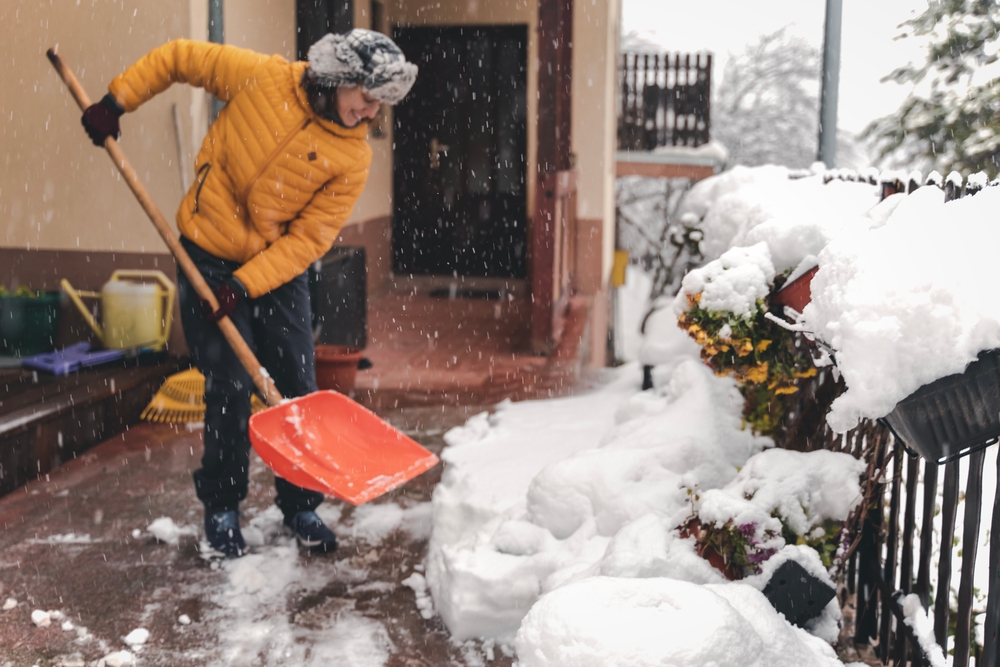
To understand the necessity of specialized maintenance in Alberta, one must first analyze the atmospheric forces at play. The province is subject to arctic outflows that can sustain temperatures below -30°C for extended periods, punctuated by Chinooks—warm, dry winds descending from the eastern slopes of the Rockies. These winds are formed through adiabatic compression: as moist air rises over the mountains, it cools and loses moisture, but as it descends the leeward side, it warms rapidly due to increasing atmospheric pressure.
The impact of these cycles on a home is profound. The rapid thaw caused by a Chinook followed by a sudden freeze creates a perpetual freeze-thaw cycle that accelerates the weathering of asphalt, concrete, and masonry. Furthermore, recent data from 2025 and 2026 suggests a trend toward unseasonably warm winters followed by record-breaking cold snaps, such as the 121-year low recorded in Red Deer. This unpredictability requires a maintenance strategy that is both proactive and adaptable.
Historical Alberta Weather Extremes and Maintenance Implications
| Event Type | Historical Record | Maintenance Criticality | Structural Impact |
| Chinook Temperature Shift |
+21°C in 4 minutes (Pincher Creek) |
Extremely High |
Thermal shock to roofing and seals |
| Extreme Cold Snap |
-12.7°C daily min (Red Deer, Oct 2025) |
High |
Premature freezing of undrained lines |
| Heavy Snowfall |
175 cm in two weeks (1967) |
High |
Structural load and ice dam formation |
| Unseasonable Warmth |
20°C in February (Lethbridge, 2026) |
Moderate |
Premature melt leading to basement flooding |
| Strong Winds |
90 km/h blizzard winds |
High |
Loss of shingles and siding integrity |
The Building Envelope: Mitigation of Ice Dams and Attic Rain
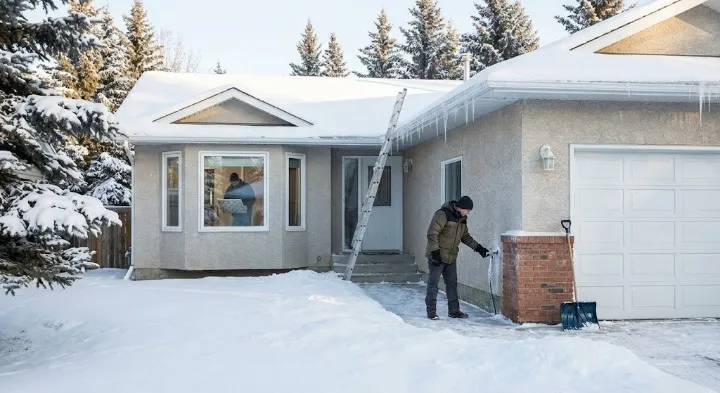
The roof and attic assembly constitute the primary defense against the Alberta winter, yet they are frequently the site of the most insidious damage. Ice dams—ridges of ice that form at the eaves of a roof—are a direct consequence of thermal mismanagement within the building envelope. The mechanism is a three-stage process: heat escapes from the living space into the attic, warming the roof deck and melting the bottom layer of snow; the meltwater flows down the roof until it reaches the cold eaves (which are unheated by the attic); the water refreezes, creating a barrier that traps subsequent meltwater, which eventually forced under the shingles.
The Phenomenon of Attic Rain
In addition to ice dams, Alberta homes are particularly prone to “attic rain.” During prolonged cold snaps, moisture from the home’s interior escapes into the attic via air leaks (bypass) and freezes into frost on the underside of the roof deck. When a Chinook arrives, this frost melts rapidly, creating a deluge of water that mimics a roof leak, damaging insulation, drywall, and electrical systems. Effective mitigation requires a combination of air sealing, optimized insulation, and balanced ventilation.
Advanced Attic Performance Standards
| Feature | Standard Requirement | Objective | Source |
| Attic Insulation | R-50 to R-60 (approx. 20 inches) | Minimize heat transfer from living space | |
| Air Sealing | 100% sealing of bypasses (hatches, vents) | Prevent moisture migration into attic | |
| Ventilation | 1 sq. ft. of vent per 300 sq. ft. of attic | Regulate roof deck temperature | |
| Eavestrough | Debris-free with 2m extensions | Ensure rapid drainage of meltwater |
Research indicates that even substantial air sealing may not always yield predictable results in attic temperature indices, suggesting that conductive heat losses from party walls and chimneys in older townhouses can overwhelm standard mitigation efforts. Therefore, a multi-pronged approach involving specialized insulation and the removal of snow from roof edges with a roof rake is essential for preventing structural damage and subsequent insurance claim denials.
Mechanical Systems: HVAC Optimization and Indoor Atmospheric Control
The furnace is the operational heart of the Alberta home during the winter months. In a climate where a furnace failure at -30°C can lead to frozen pipes and structural freezing within 24 hours, the reliability of the HVAC system is a life-safety issue. Routine maintenance significantly improves efficiency and longevity while reducing the energy demand of the home.
Furnace and Air Quality Management
A primary task in furnace maintenance is the regular replacement of the air filter. A clogged filter restricts airflow, forcing the system to operate for longer cycles and increasing wear on the blower motor. In high-efficiency homes, the Heat Recovery Ventilator (HRV) is equally critical. The HRV allows for the exchange of stale indoor air with fresh outdoor air while recovering thermal energy, but its filters must be cleaned of frost and dust to maintain air quality and prevent the “stuffiness” often experienced in winter.
The physics of indoor air quality in a sealed environment is governed by the relationship between temperature and relative humidity. In the Alberta winter, the outdoor air is extremely dry. When this air is heated to room temperature, its relative humidity can drop to levels that cause respiratory discomfort, static shocks, and damage to wood products. Conversely, maintaining too much humidity in a house during a cold snap can lead to window condensation and mold growth. Experts recommend a “sweet spot” of approximately 20-40% relative humidity, adjusted downward as the exterior temperature drops.
Seasonal HVAC and Mechanical Checklist
| Component | Task | Frequency | Benefit |
| Furnace Filter | Replace (MERV 8-11 recommended) | Monthly to Bi-monthly | Reduced fuel bills; cleaner air |
| Humidifier | Clean pad; adjust to winter setting | Twice per season | Prevents static; protects wood |
| HRV/ERV | Clean filters and core | Every 3 months | Improved indoor oxygen levels |
| Thermostat | Set to minimum 15°C (59°F) | Continuous | Prevents pipe freezing when away |
| Ceiling Fans | Reverse direction (clockwise) | Seasonal | Pushes warm air down |
Plumbing Integrity and Cryogenic Protection
The risk of frozen and burst pipes in Alberta is exacerbated by the province’s extreme cold and the propensity for owners to inadvertently leave vulnerable areas exposed. Pipes located in unheated areas such as crawl spaces, garages, and attics, as well as those along exterior walls, are at the highest risk.
Thermodynamics of Pipe Bursts
A common misconception is that the pipe bursts at the point of ice formation. In reality, the burst often occurs because of the pressure buildup between the ice blockage and a closed faucet. As ice expands, it displaces the remaining water, and if the pressure exceeds the structural limits of the pipe (typically copper or PEX), a rupture occurs. This is why letting a faucet “drip” during extreme cold—specifically when temperatures fall below -25°C—is an effective preventative measure, as it provides a pressure relief path.
Strategic Plumbing Protection
Beyond dripping faucets, the following technical interventions are necessary:
-
Insulation: Applying foam sleeves or heat tape to exposed pipes in unheated zones.
-
Thermal Circulation: Opening cabinet doors under sinks on exterior walls to allow ambient home heat to reach the plumbing.
-
Outdoor Management: Disconnecting garden hoses and shutting off interior valves for exterior hose bibs. Leaving a hose connected traps water that can freeze and transfer pressure back into the interior plumbing.
-
Sump Pump Reliability: Alberta’s unpredictable thaws and Chinooks can lead to mid-winter flooding. Sump pumps must be tested by pouring water into the pit to ensure the float switch activates the pump.
Interior Maintenance and Asset Preservation
The winter environment inside an Alberta home is distinct from any other season. The reliance on heating systems creates a micro-climate that affects materials differently. For instance, the use of salts and ice melts on sidewalks results in these chemicals being tracked into entryways, where they can damage grout and stone flooring.
Hygiene and Material Science in the Winter Home
Grout is naturally porous and requires a sealer every 1-2 years to prevent staining from snowy boots and winter contaminants. Similarly, granite and other natural stone countertops should be sealed to protect against the oils and acids from the “heavy” cooking typical of winter months.
Professional cleaning services, such as those provided by Alberta Spotless Clean, play a vital role in winter maintenance by addressing the accumulation of dust and allergens that occur when a home is “sealed up” for the season. Deep cleaning of carpets and upholstery removes the fine particulates that are not captured by standard vacuuming, significantly improving the indoor air quality for residents with respiratory sensitivities.
Interior Maintenance and Cleaning Priority Table
| Asset | Maintenance Action | Technical Rationale | Source |
| Tiled Floors/Grout | Apply sealer | Prevent salt and moisture penetration | |
| Stone Countertops | Apply granite sealer | Protect against staining from fatty foods | |
| Floor Drain | Flush with water/vegetable oil | Maintain water seal in P-trap | |
| Range Hood Filters | Degrease monthly | Improve fan efficiency and fire safety | |
| Windows/Sills | Wipe condensation | Prevent mold growth and wood rot |
Safety, Life Preservation, and Emergency Preparedness
Winter in Alberta brings an increased risk of carbon monoxide (CO) poisoning and house fires due to the heavy use of furnaces, fireplaces, and portable heaters. CO is a colorless, odorless byproduct of incomplete combustion; its presence in the home is often the result of a cracked furnace heat exchanger or a blocked chimney flue.
Life Safety System Audits
Homeowners must prioritize the monthly testing of smoke and CO detectors. It is recommended to maintain a double power source (plug-in with battery backup) to ensure protection during power outages. For wood-burning fireplaces, an annual inspection by a certified chimney sweep is necessary to remove creosote—a highly flammable residue—and to check for obstructions like bird nests.
In the event of a power outage during a blizzard, the home’s temperature can drop rapidly. A “72-hour kit” should be standard in every Alberta household, containing non-perishable food, potable water, flashlights, extra batteries, and a battery-powered or hand-crank radio to receive emergency alerts.
Ecological and Historical Storytelling: Learning from the Alberta Landscape
The Alberta winter is not just a technical challenge; it is a storied season that provides ecological cues for those who know how to read them. The indigenous perspective on winter is deeply rooted in the concept of the “Winter Count”—a pictorial record of the most significant event of each year used by the Kainai People. These records offer a longitudinal view of the Alberta climate, documenting years of extreme cold, heavy snow that trapped buffalo, and unseasonable thaws long before official meteorological records began.
Similarly, the natural world offers a “canvas” in the snow. Observing animal tracks can reveal the stories of the snowshoe hare, the marten, and the owl. From a maintenance perspective, the presence of small mammal tracks—such as mice or voles—leading toward the foundation of a home can be a critical indicator of a breach in the building envelope. These creatures seek the same warmth that the furnace provides, and their entry points are often the same gaps that allow cold air to infiltrate and freeze pipes.
Structural Physics and Energy Performance Metrics
The energy efficiency of an Alberta home in winter is largely a function of the temperature differential between the interior and exterior environments. The heat loss through any given building component can be modeled by the equation:
Where:
- $Q$ is the heat loss (Watts).
- $U$ is the thermal transmittance ($1/R$-value).
- $A$ is the surface area.
- $\Delta T$ is the temperature difference between the inside and outside.
In Alberta, where $\Delta T$ can exceed 50°C during an arctic outflow (e.g., +20°C inside and -30°C outside), the value of $U$ (or the inverse $R$-value) becomes paramount. This explains why improving attic insulation from R-20 to R-60 is one of the most cost-effective long-term investments a homeowner can make. Furthermore, the “candle test”—walking a lit candle around window and door frames to identify air drafts—is a simple yet effective way to find convective heat loss points that contribute to both high energy bills and the risk of frozen pipes.
Conclusion: A Strategic Framework for Alberta Winter Resilience
Winter home maintenance in Alberta is an ongoing process of stewardship that requires an understanding of thermodynamics, mechanical engineering, and local meteorology. By adopting a proactive approach that includes regular HVAC servicing, rigorous attic management, and meticulous water systems protection, property owners can ensure their homes remain safe and efficient.
The integration of professional cleaning and maintenance services, like those offered at albertaspotlessclean.ca, provides a final layer of protection for the interior environment. As the climate in Alberta continues to exhibit increased variability, the traditional wisdom of the “Winter Count” combined with modern building science offers the best path forward. A well-maintained home is more than just a shelter; it is a resilient asset capable of withstanding the majestic and formidable power of the Alberta winter.