Proven Post Construction Cleaning Checklist Alberta Guide
Introduction
The conclusion of a construction project is a moment of profound contradiction. On one hand, there is the architectural triumph—the realization of blueprints, the smell of fresh timber, and the gleam of new fixtures. On the other, there is the chaotic reality of the job site: a landscape dominated by pervasive dust, adhesive residues, scattered debris, and the lingering chemical scent of uncured finishes. For a homeowner, a developer, or a facility manager, this transition phase is emotionally charged. It represents the final hurdle between the stress of construction and the joy of occupancy. However, crossing this bridge requires more than a broom and a bucket; it demands a highly technical, safety-regulated intervention known as post-construction cleaning.
In the province of Alberta, this process is uniquely challenging. The cleaning protocols here are dictated not only by the universal physics of particulate matter but also by a rigorous specific regulatory environment. Alberta’s Occupational Health and Safety (OHS) Code imposes strict liability regarding respirable crystalline silica, a ubiquitous hazard in construction dust. Furthermore, the province’s severe climate—characterized by deep freeze winters and rapid thaw cycles—introduces complex variables regarding humidity control, solvent performance, and the management of traction abrasives like salt and gravel.
This report serves as a comprehensive operational manual for post-construction cleaning in Alberta. It is designed for industry professionals who require an exhaustive understanding of the “Rough, Light, and Final” cleaning phases, the chemical science behind residue removal, and the legal frameworks governing occupancy permits in municipalities such as Calgary, Edmonton, and St. Albert. By synthesizing data from provincial safety statutes, New Home Warranty standards, and industrial hygiene best practices, we establish a standard of care that protects both the physical asset and the health of its future occupants.
2. The Regulatory Landscape: Safety, Compliance, and Liability in Alberta
The foundation of any professional post-construction cleaning operation in Alberta is legal compliance. Unlike general janitorial work, construction cleaning is classified as a hazardous activity due to the nature of the waste products involved. Ignorance of these regulations can lead to immediate stop-work orders, significant fines, and long-term litigation regarding worker healthcare cleaning calgary or environmental contamination.
2.1 The Silica Hazard: Alberta OHS Code Compliance
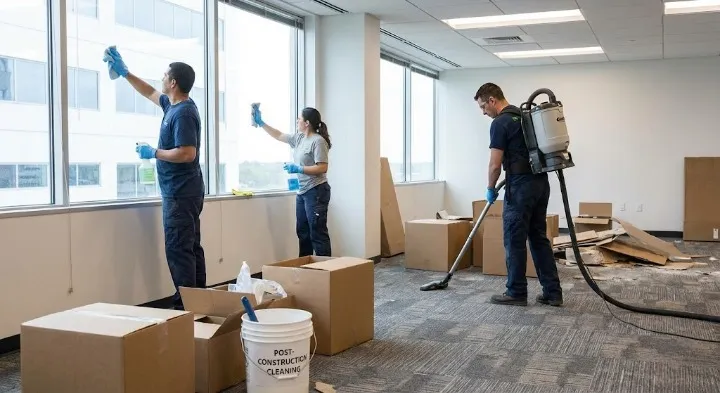
The most significant biological hazard in post-construction cleaning is Respirable Crystalline Silica (RCS). Silica is found in common construction materials such as concrete, brick, mortar, drywall compound, and engineered stone. During construction activities like cutting, grinding, and sanding, these materials release microscopic dust particles (smaller than 10 microns) that can be inhaled deep into the lungs.
2.1.1 The Pathology and Legal Thresholds
Inhalation of RCS leads to silicosis, an incurable and often fatal lung disease, as well as an increased risk of lung cancer and autoimmune disorders. Recognizing this, Alberta OHS legislation has established strict Occupational Exposure Limits (OELs). The cleaning phase is particularly high-risk because it involves the disturbance of settled dust, which re-aerosolizes silica particles, creating acute exposure events for workers.
Under the Alberta OHS Code, Part 4, employers are mandated to conduct a hazard assessment before work begins. If the assessment indicates that silica dust may be present—which is virtually guaranteed on any site involving drywall or concrete work—specific control measures must be implemented. “Dry sweeping” of construction dust, a traditional practice, is now largely prohibited or strictly regulated because it generates massive airborne plumes of silica.
2.1.2 The Hierarchy of Controls for Cleaning Operations
Cleaning contractors must adhere to the hierarchy of controls to mitigate silica risks:
| Control Level | Application in Post-Construction Cleaning |
| Engineering Controls | The primary defense. This involves the use of High-Efficiency Particulate Air (HEPA) vacuum systems that capture 99.97% of particles at 0.3 microns. Standard shop vacuums are insufficient as they often exhaust fine silica dust back into the room. Wet cleaning methods (mopping, wet wiping) are also engineering controls as they bind dust to water, preventing aerosolization. |
| Administrative Controls | Scheduling cleaning activities when other trades are not present (isolation). Implementing rotation schedules to limit the duration of worker exposure to high-dust environments. |
| Personal Protective Equipment (PPE) | When engineering controls are insufficient, workers must wear respiratory protection. In Alberta, this typically requires N95 filtering facepiece respirators or elastomeric half-mask respirators with P100 cartridges. Crucially, OHS regulations mandate that workers must be fit-tested for these respirators to ensure a proper seal. |
2.2 Environmental Stewardship and Municipal Bylaws
Post-construction cleaning generates a significant volume of waste, including liquid effluents and hazardous solids. The disposal of these materials is governed by the Environmental Protection and Enhancement Act (EPEA) and specific municipal bylaws.
2.2.1 Wastewater Management
In municipalities like St. Albert and Calgary, strict stormwater bylaws prohibit the discharge of “deleterious substances” into the storm sewer system. Post-construction wash water often contains paint residue, drywall mud, high-pH cleaning agents, and sediment. Pouring mop buckets into a street drain is a violation of these bylaws and can result in substantial fines.
Contractors must implement a “Sanitary Sewer Only” policy, ensuring that all wastewater is disposed of via indoor utility sinks or floor drains connected to the sanitary treatment system. For large-scale exterior cleaning (e.g., pressure washing a parkade), water recovery systems may be required to prevent runoff from entering the stormwater system.
2.2.2 Hazardous Waste Segregation
Construction sites frequently contain abandoned hazardous materials such as:
- Solvents and Thinners: Used for cleaning paint equipment.
- Adhesives and Sealants: Partially used tubes of caulking or construction adhesive.
- Aerosols: Spray paints, expanding foams, and lubricants.
These cannot be disposed of in general construction waste bins. They must be segregated and transported to approved hazardous waste management facilities. Alberta Environment and Parks monitors the movement of hazardous waste, and commercial generators may require a waste generator number.
2.3 Occupancy Permit Standards
The ultimate goal of the construction phase is the issuance of an Occupancy Permit (or Certificate of Occupancy). While building inspectors focus on structural integrity and life safety systems, cleanliness plays a vital role in passing these inspections in Edmonton and Calgary.12
- Fire Safety Systems: Construction dust can compromise smoke detectors and clog sprinkler heads. Inspectors will fail a walkthrough if safety devices are covered in dust or paint overspray.
- Egress Paths: Hallways, stairwells, and emergency exits must be entirely free of construction debris and tripping hazards. A “broom clean” standard is the absolute minimum for safety inspections.
- Sanitary Facilities: For an occupancy permit to be granted, particularly in commercial or residential builds, the washrooms must be functional and sanitary. This implies a level of Cleaning Calgary Services sufficient to remove construction grime from toilets and sinks.
3. The Science of Construction Soils: Understanding the Enemy
To effectively clean a post-construction site, one must understand the chemical and physical nature of the residues being removed. Construction “dirt” is fundamentally different from the organic soils (food, skin cells, grease) found in occupied homes. It is primarily inorganic, abrasive, and chemically reactive.
3.1 Particulate Matter Mechanics
The dominant soil is dust, but it is a complex mixture.
- Drywall Dust (Gypsum): A fine, talc-like powder that is highly pervasive. It is abrasive and hygroscopic (absorbs moisture). If wiped with a wet cloth without being vacuumed first, it turns into a paste that dries into a difficult-to-remove haze.
- Sawdust: Cellular organic material. While easier to remove, fine sawdust can linger in the air for hours before settling, necessitating repeated cleaning passes.
- Concrete/Grout Dust: Highly alkaline and abrasive. If left on finished floors (hardwood or vinyl), foot traffic will grind this dust into the finish, causing micro-scratches that dull the surface permanently.
3.2 Chemical Residues
- Adhesives: Construction adhesives, carpet glues, and tapes leave sticky residues. These require solvent-based cleaners for removal. The challenge is selecting a solvent (e.g., citrus-based, acetone, xylene) that dissolves the adhesive without damaging the substrate (e.g., melting plastic trim or stripping varnish).
- Paint Overspray: Latex paint droplets are common on windows and floors. While they can often be scraped off glass, removing them from porous surfaces like grout or textured vinyl requires specific chemical softeners.
- Silicone and Caulking: Smears of silicone sealant are notoriously difficult to remove because they repel water-based cleaners. They typically require mechanical removal or specialized silicone digesters.
3.3 The “New Home” Chemical Cocktail (VOCs)
New office building cleaning mcalgary off-gas Volatile Organic Compounds (VOCs) from fresh paint, carpets, and cabinets. While cleaning cannot stop off-gassing, the removal of the dust reservoirs that hold these chemicals improves indoor air quality. High-grade cleaning often involves the use of air scrubbers or simply ensuring maximum ventilation during the cleaning process to flush out these airborne pollutants.
4. The Three Phases of Post-Construction Cleaning
The industry standard, reinforced by best practices from major cleaning franchises and independent contractors in Alberta, divides the process into three distinct phases. This segmentation aligns with the construction schedule and prevents the inefficiency of cleaning an area that will immediately be dirtied again by trades.
4.1 Phase 1: The Rough Clean
Timing: This phase occurs after the framing, plumbing, and electrical rough-ins are complete, often just before or after the drywall installation, but critically before the installation of finish flooring and cabinetry.
Objective: To clear the site of bulk debris and prepare the sub-surfaces for the finishing trades.
Operational Checklist:
- Bulk Debris Removal: Removal of large scraps (wood, drywall, metal studs), packaging materials, and temporary protection. This debris is typically placed in the construction dumpster. Note: Recycling diversion (wood, cardboard) helps meet LEED certification requirements.
- Subfloor Preparation: This is a critical step for the longevity of the flooring. The subfloor (plywood or concrete) must be scraped free of drywall mud splatters and thoroughly swept/vacuumed. Debris left here will cause “telegraphing” (bumps) in vinyl flooring or squeaks in hardwood.
- Window Sticker Removal: Initial removal of manufacturer labels from glass. Leaving these on too long, especially in direct sunlight, can cause the adhesive to bake onto the glass, increasing the risk of scratching during removal later.
- Safety Hazard Remediation: Removal of nails, screws, and sharp metal clippings that pose puncture hazards.
4.2 Phase 2: The Light (Prep) Clean
Timing: This is the most labor-intensive phase. It occurs after all major construction is complete—cabinets are in, walls are painted, flooring is laid—but before the final “punch list” inspection by the owner.
Objective: To bring the building to a “visually clean” state. This clean reveals the true condition of the finishes, allowing the builder to identify defects.
Operational Checklist:
- High-Level Dusting: Cleaning begins at the ceiling. Light fixtures, ceiling fan blades, and air vents are dusted/vacuumed.
- Kitchen & Bath Detail:
- Cabinetry: Vacuuming the interior of all cabinets and drawers is non-negotiable. Sawdust accumulates in the drawer slides and corners.
- Fixtures: Removal of protective films from appliances. Cleaning of sinks, tubs, and toilets.
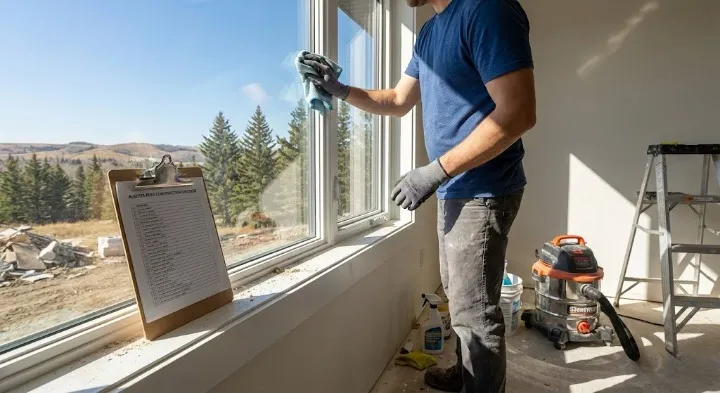
- Window Detailing: Thorough cleaning of interior and exterior glass (where accessible), including tracks, sills, and frames. This often involves razor-blade scraping (on appropriate glass types) to remove paint overspray.
- Floor Care: Vacuuming and mopping of hard floors. Vacuuming of carpets.
- Air Quality: Cleaning of air registers and intake vents.
4.3 Phase 3: The Final (Touch-Up) Clean
Timing: Occurs 1-3 days before the official handover or move-in. It happens after the trades have returned to fix the “punch list” items (e.g., touching up paint, adjusting doors).
Objective: To achieve the “white glove” standard. The goal is perfection.
Operational Checklist:
- Smudge Removal: Wiping fingerprints off stainless steel appliances, glass doors, and light switches.
- Settled Dust Removal: Fine dust can take days to settle. A final vacuum and dry mop are required to capture this layer.
- Trade Track-In: Cleaning up muddy footprints or debris left by the technicians who performed the final repairs.
- Garage & Exterior: Sweeping the garage floor and ensuring the entryway is pristine to create a strong first impression.
5. Comprehensive Room-by-Room Cleaning Protocol
The following sections provide a granular, room-specific analysis of cleaning tasks, integrating the “why” and “how” for professional execution.
5.1 Kitchens: The Heart of the Clean
The kitchen contains the most expensive finishes and requires the highest sanitation standards.
| Component | Cleaning Protocol & Technical Insight |
| Cabinetry | Protocol: Vacuum interiors first, then wipe with a damp microfiber cloth and a mild, neutral cleaner.
Insight: Pay attention to the tops of upper cabinets (a dust trap) and the toe-kicks (where debris hides). Use a crevice tool for drawer tracks. |
| Countertops | Protocol: Clean natural stone (granite/marble) with pH-neutral stone cleaners. Quartz can tolerate mild degreasers.
Insight: Never use abrasive pads (green Scotch-Brite) on high-gloss surfaces. Use plastic razor blades to pop off dried construction adhesive without scratching. |
| Appliances | Protocol: Remove all blue protective film. Clean interior shelves of the fridge. Run a cycle in the dishwasher to flush construction dust from lines.
Insight: Do not overlook the oven interior; ensure no plastic packaging or manuals are left inside, which poses a fire hazard. |
| Sinks & Hardware | Protocol: Polish chrome/stainless steel. Clean the aerator on the faucet.
Insight: Construction dislodges sediment in pipes; clogged aerators are a common post-construction complaint. |
5.2 Bathrooms: Hygiene and Haze Removal
Bathrooms often suffer from “grout haze”—a white, chalky residue left on tiles after grouting.
- Tile and Grout: Grout haze requires an acidic cleaner (sulfamic or phosphoric acid based) for removal. However, extreme caution is required: acidic cleaners can etch natural stone (marble/travertine). Always test first.
- Tubs and Showers: Fibreglass and acrylic tubs scratch easily. Use only soft cloths and non-abrasive cream cleansers. Remove any stickers from the tub floor immediately, as they become impossible to remove once wet repeatedly.
- Toilets: Sanitize the entire unit. Check the base of the toilet for silicone sealant smears left by the plumber.
- Mirrors: Clean with glass cleaner. Inspect for paint splatter, which should be removed with a plastic scraper, not a metal razor, to avoid scratching the silver backing if the edge is exposed.
5.3 Living Areas and Bedrooms
The focus here is on walls, floors, and windows.
- Walls: Fresh flat paint is porous and easily burnished (shiny spots appear if rubbed). “Dry dusting” with a Swiffer-style flat mop or soft vacuum brush is preferred over wet wiping. Only spot-clean scuffs if necessary.
- Floors (Hardwood/LVP): Vacuuming is critical to remove grit. Mop with a “damp” (not wet) microfiber mop. Excessive water can cause swelling in new hardwood or laminate seams.
- Carpets: Deep vacuuming is essential. Use an upright vacuum with a beater bar (brush roll) to agitate the fibers and release deep-set construction dust. Ensure the vacuum height is set correctly to avoid damaging the new pile.
5.4 Windows and Glass: A Technical Discipline
Window cleaning is the most technical aspect of the post-construction phase.
- The “Fabricating Debris” Problem: Tempered glass (often used in doors and lower windows) sometimes has microscopic glass fines fused to the surface from the manufacturing process. If a metal scraper is used to remove paint, it can dislodge these fines and drag them across the glass, causing extensive scratching. Best Practice: Always test a small area. Use 0000 steel wool or a white scrub pad instead of a razor on tempered glass.
- Tracks and Frames: Vacuum the tracks first. A wet slurry of dust in a window track is difficult to remove. Use a toothbrush or detail brush to clean the corners.
6. Commercial and Warehouse Cleaning Specifics
While residential cleaning focuses on livability, commercial and warehouse cleaning focuses on scale, safety, and operational efficiency. In logistics hubs like Warehouse cleaning services Calgary is a specialized service.
6.1 Warehouse High Dusting and Structure
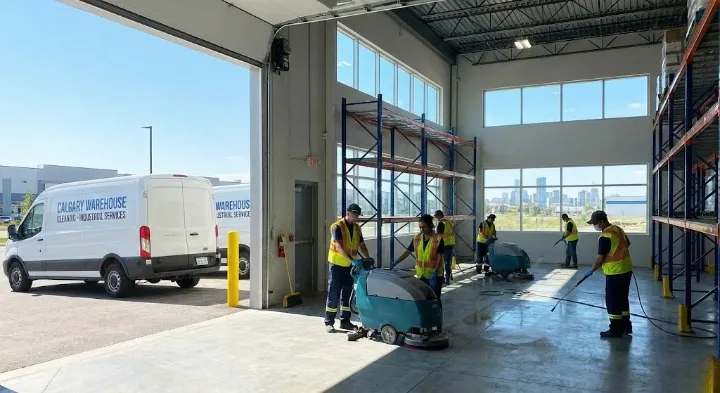
In a new warehouse build, dust settles on the trusses, rafters, high-bay lighting, and sprinkler pipes.
- Technique: Use of scissor lifts or boom lifts is required. Staff must be certified in “Working at Heights” and Fall Protection.
- Equipment: Backpack HEPA vacuums are essential. Blowing the dust down with compressed air is often prohibited as it contaminates the air and lower surfaces.
6.2 Industrial Floor Care
Warehouse floors (usually polished concrete) require industrial-grade cleaning to remove tire marks from forklifts and construction grime.
- Autoscrubbers: These machines inject water/solution, scrub the floor with high pressure, and vacuum up the dirty water in a single pass. This is the only way to clean thousands of square feet efficiently.
- Sealing/Densifying: Post-construction is the ideal time to apply concrete densifiers or sealers to prevent “dusting” of the concrete over time.
6.3 Warehouse Cleaning Services Calgary Integration
For facility managers in the Calgary area, outsourcing this massive task is often the most cost-effective solution. Specialized providers like https://albertaspotlessclean.ca offer the heavy equipment (lifts, industrial scrubbers) and certified personnel required to execute these high-volume cleans safely and compliantly. Utilizing a local specialist ensures adherence to Calgary-specific bylaws regarding wastewater disposal and noise ordinances.
7. The Alberta Factor: Winter, Weather, and Cleaning
Cleaning a construction site in July is difficult; cleaning one in January in Alberta is a battle against the elements.
7.1 Freezing Temperatures and Glass
Cleaning windows at -20°C requires chemistry modification. Standard water freezes instantly.
- The Solution: Professional cleaners mix methanol (windshield washer fluid) or isopropyl alcohol with water. A common ratio is 50/50, but in extreme cold, pure winter-rated washer fluid is used.
- Safety: Alcohol evaporates quickly, but in cold air, it lingers. Workers need appropriate PPE.
7.2 The Mud and Salt Battle
“Winter dirt” in Alberta is a slurry of snow, mud, and de-icing salts (calcium chloride).
- Salt Neutralization: Salt is alkaline and leaves a white, crusty residue that damages floors. Cleaners should use a salt neutralizer (acidic rinse) rather than just hot water to break down the crystals.
- Matting Strategies: During the final phases, deploying heavy-duty “walk-off” mats at all entrances is critical to prevent the re-soiling of clean floors.
7.3 Humidity Control
Construction introduces moisture (drywall mud, paint, concrete curing). In the dry Alberta winter, this creates condensation on cold windows, leading to ice buildup or water damage on sills. Cleaning crews must diligently wipe down sills and monitor humidity levels, advising the builder if dehumidification is needed.
8. Tools, Equipment, and Safety Gear
The distinction between amateur and professional cleaning lies in the equipment.
8.1 Filtration Technology
- HEPA Vacuums: As discussed in the silica section, HEPA filtration (99.97% @ 0.3 microns) is mandatory for health safety. Brands like Nilfisk, Pullman-Holt, and Dustless Tools are industry standards.
- Pre-Separators: Used in rough cleaning to capture 90% of bulk dust before it clogs the expensive HEPA filter.
8.2 Floor Care Machinery
- Propane vs. Electric: In large, ventilated warehouses, propane burnishers and scrubbers offer cord-free mobility and high power. In enclosed residential or office spaces, battery-operated electric units are required to prevent carbon monoxide buildup.
8.3 Personal Protective Equipment (PPE)
- Respiratory: Fit-tested N95 or P100 respirators.
- Vision: Safety glasses to protect against splashing chemicals and falling dust during high cleaning.
- Dermal: Nitrile gloves for chemical handling; cut-resistant gloves when handling debris or razor blades.
- Footwear: CSA-approved steel-toe boots are required on any active construction site (Rough/Light phases).
9. New Home Warranty and Asset Protection
In Alberta, the New Home Buyer Protection Act mandates warranty coverage. Post-construction cleaning impacts this warranty.
- Improper Maintenance: Using the wrong chemical (e.g., ammonia on hardwood) can void the manufacturer’s warranty on the flooring. If the floor fails later, the warranty provider may deny the claim citing “improper maintenance.”
- Documentation: Professional cleaners should provide a checklist of tasks performed. This serves as proof of due diligence for the builder, showing that the home was delivered in good condition.
10. Conclusion: The Value of Professional Execution
Post-construction cleaning is not merely a janitorial task; it is a critical phase of the construction process that intersects with safety regulations, asset protection, and customer satisfaction. In Alberta, where the stakes are raised by strict OHS silica rules and a harsh climate, the “bucket and rag” approach is obsolete.
For builders, hiring a professional service ensures that the handover is smooth, safety inspections are passed, and the craftsmanship of the build is showcased without the distraction of dust. For homeowners, a thorough post-construction clean provides the peace of mind that their new environment is safe, healthy, and truly ready for life to begin.
Whether managing a high-rise condo in Edmonton, a custom home in St. Albert, or a logistics facility in Calgary, the rigorous application of the checklists and protocols outlined in this guide is the final, essential step in the building lifecycle.