Proven Dust Control Alberta Homes Guide for Fresh Living
You wake up on a crisp Tuesday morning in Calgary or Edmonton. The sun is streaming through the window, but instead of a beautiful view, you see a swirling galaxy of dancing particles suspended in the light. You look at your coffee table—the one you just polished two days ago—and there it is again: a fine, greyish-white film of dust. It feels like a losing battle, doesn’t it? You clean, you vacuum, and you scrub, yet the Alberta environment seems determined to move the outdoors inside.
In this province, dust isn’t just a sign that you’ve been busy; it’s an environmental reality. From the bone-dry winter air that turns every skin cell into a floating projectile to the legendary Chinooks that rattle your window frames and breathe silt into your vents, the challenges are unique. This article is your comprehensive blueprint for mastering dust control Alberta homes. You will learn about the science of Alberta’s air, the biological secrets of the dust mite, and how to engineer your home to be a fortress against particulates. We will dive into professional HVAC strategies, the importance of a winter home maintenance checklist Alberta, and how to handle the specific chaos of post-renovation debris. By the end, you’ll have the tools to transform your living space into a breathable sanctuary.

The Alberta Environmental Context: The “Particulate Paradox”
To master dust control Alberta homes, you must first understand the enemy’s origins. Alberta is geographically predisposed to high dust levels due to its semi-arid climate and proximity to the Rocky Mountains. Unlike the humid provinces to the east or the damp coastal regions of British Columbia, Alberta lacks the consistent moisture that normally weighs down atmospheric dust and washes the air clean.
The Phenomenon of the Chinook and the “Brown Season”
If you live in Southern Alberta, you are intimately familiar with the Chinook. These “snow eaters” are warm, dry winds that descend from the mountains, often raising the temperature by 20 degrees in a matter of hours. While they offer a welcome break from the deep freeze, they are a primary culprit for poor indoor air quality. As the snow melts rapidly, it exposes months of accumulated road salt, silt, and dried organic matter—a period often referred to as the “brown season”.
The high-velocity winds of a Chinook aerosolize this silt and force it against your home’s envelope. Furthermore, the rapid temperature shifts cause your home’s building materials to expand and contract. This thermal movement creates tiny gaps in window seals and door frames, allowing fine silt to migrate into your living room. Research shows that during these events, atmospheric albedo is lower and humidity can fluctuate wildly, leading to increased buoyancy for soil particles.
Wildfire Smoke and Fine Particulate Matter ($PM_{2.5}$)
In recent years, the Alberta summer has been defined by a new threat: wildfire smoke. This isn’t your average campfire ash. Wildfire smoke is comprised of fine particulate matter known as $PM_{2.5}$. These particles are so small—about 2.5 micrometers in diameter—that four of them can fit across a single grain of standard household dust.
| Particle Type | Size (micrometers) | Characteristics in Alberta |
| Coarse Dust | 10 – 100 $\mu m$ | Silt, sand, and large fibers. Settles quickly. |
| Standard Dust | 5 – 10 $\mu m$ | Skin cells, pet dander, and pollen. |
| Fine Particulate ($PM_{2.5}$) | 2.5 $\mu m$ | Wildfire smoke and industrial emissions. |
| Ultra-Fine ($PM_{0.3}$) | 0.3 $\mu m$ | Bacteria and fine combustion particles. |
Because these particles are so light, they can travel thousands of miles and penetrate even the tightest homes. To achieve effective dust control Alberta homes during fire season, you cannot rely on simple cleaning; you need advanced filtration that can capture these microscopic invaders before they enter your bloodstream.
The Anatomy of Dust: What Are You Actually Breathing?
It’s a common misconception that dust is just “dirt” from the outside. In reality, your home is a complex ecosystem that generates its own debris. When you look at a speck of dust under a microscope, you aren’t just seeing soil; you’re seeing a history of your household’s biological and chemical life.
The Human and Pet Factor
You might be surprised to learn that a massive percentage of household dust is actually you. The average human sheds approximately 1.5 grams of dead skin cells every single day. In an airtight Alberta home during the winter, these skin flakes have nowhere to go. They accumulate in your carpets, your upholstery, and especially your bedding.
If you share your home with furry companions, the “dust load” increases exponentially. Pet dander—microscopic flecks of skin shed by cats, dogs, and even birds—is one of the most common allergens in the province. Dander is incredibly light and sticky, meaning it clings to walls and circulates through your HVAC vents long after the pet has left the room. This is why many residents seek out pet friendly carpet cleaning Calgary services to deep-clean the fibers where these proteins hide.
The Microscopic Residents: Dust Mites
Where there is dead skin, there are dust mites. These microscopic, eight-legged creatures are not visible to the naked eye, but they are likely living in your mattress and carpets by the millions. They don’t bite, but they produce waste particles and body fragments that are potent triggers for asthma and allergies.
-
TL;DR Summary: Household dust is a mix of outdoor silt, human skin, pet dander, and dust mite waste. In Alberta’s dry climate, these particles stay airborne longer, making them easier to inhale and harder to clean.
Engineering Your Home for Dust Control Alberta Homes
If you want to win the war on dust, you have to think like an engineer. You can’t just move the dust around with a feather duster; you have to capture it and remove it from the environment. The most powerful tool at your disposal is your HVAC (Heating, Ventilation, and Air Conditioning) system.
The MERV Rating: Your First Line of Defense
Every furnace has a filter, but not all filters are created equal. In Alberta, where we deal with everything from gravel road silt to fine smoke, the MERV (Minimum Efficiency Reporting Value) rating of your filter is crucial.
| MERV Rating | Efficiency | What it Captures |
| MERV 1-4 | Low | Large lint, carpet fibers, and standing dust. |
| MERV 5-8 | Medium | Dust mites, mold spores, and pet dander. |
| MERV 9-12 | High | Lead dust, auto emissions, and fine flour. |
| MERV 13-16 | Superior | Bacteria, most tobacco smoke, and wildfire smoke. |
For effective dust control Alberta homes, many experts recommend a MERV 11 to MERV 13 filter. However, you must be careful: higher MERV filters are thicker and can restrict airflow. If your furnace blower motor isn’t powerful enough, a high-MERV filter could cause your system to overheat. Always check your manufacturer’s recommendations or consult a pro before jumping to a MERV 16.
The Role of HEPA Filtration
For those with severe allergies or during heavy wildfire smoke events, a standard furnace filter might not be enough. HEPA (High-Efficiency Particulate Air) filters are the gold standard, capable of capturing 99.97% of particles as small as 0.3 microns. While most residential furnaces cannot handle the resistance of a whole-home HEPA filter, you can supplement your system with portable HEPA air purifiers in high-traffic areas like bedrooms or the home office cleaning.
Humidity: The Secret Weapon in Dust Management
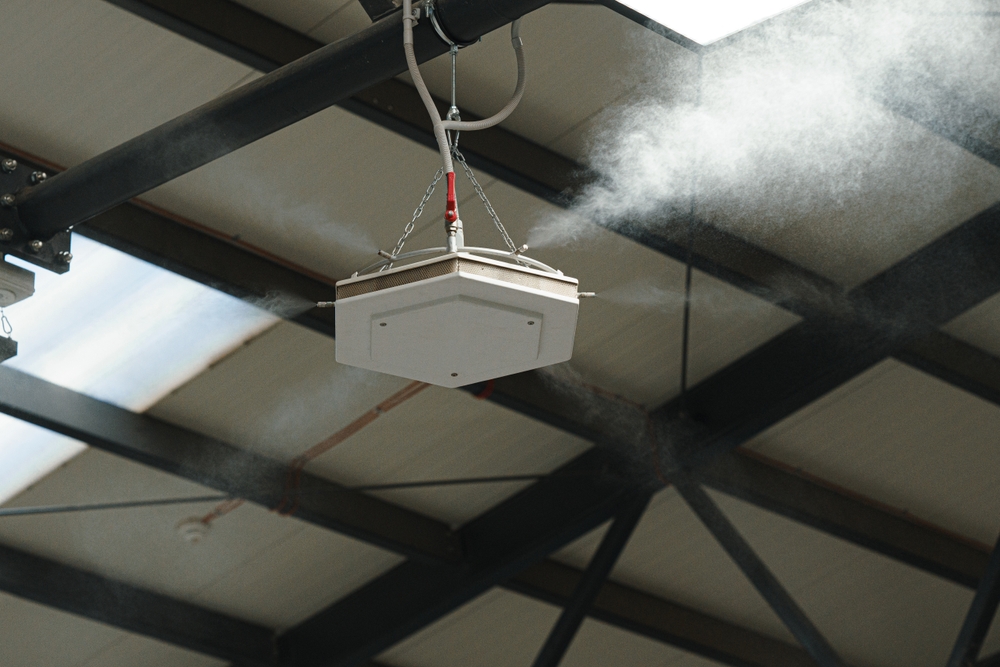
You might not associate humidity with dust, but in Alberta, they are inextricably linked. Because our air is naturally dry, dust particles become “hydrophobic” and lightweight. Static electricity, which thrives in dry air, causes dust to cling to electronic screens, baseboards, and walls.
The 35% to 50% Rule
To achieve optimal dust control Alberta homes, you should aim for a relative humidity (RH) level between 35% and 50%.
-
If it’s too dry (<30%): Dust stays airborne longer, and your nasal passages dry out, making you more susceptible to the allergens you do breathe in.
-
If it’s too humid (>55%): You create a tropical paradise for dust mites and mold. Dust mites cannot survive if the humidity is kept below 50%.
Using a hygrometer—a cheap device available at any hardware store—allows you to monitor these levels. During the winter, you may need a whole-home humidifier, but you must be vigilant. If you see frost or condensation on your windows, your humidity is too high, and you risk mold growth within your walls.
Post-Construction Dust: A Specialized Nightmare
There is no dust more intrusive than construction dust. If you’ve recently renovated your kitchen or finished your basement, you know that drywall dust (calcium sulfate) and sawdust have a magical ability to travel through solid walls. This fine powder is not just a nuisance; it’s abrasive and can damage your HVAC system if not handled correctly.
The Post Construction Cleaning Checklist Alberta
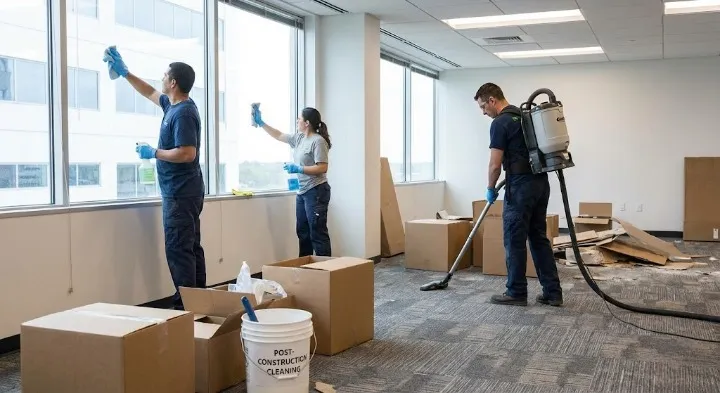
When you are reclaiming your home from a contractor, you need a systematic approach. A basic sweep will not suffice. You need to follow a post construction cleaning checklist Alberta to ensure the air is safe for your family:
-
Vacuum Everything: Use a shop-vac or a vacuum with a HEPA filter. Do not use a standard domestic vacuum initially, as the fine drywall dust can clog the motor or be blown right back out the exhaust.
-
Top-to-Bottom Wipe Down: Start at the ceiling fans and light fixtures. Dust settles downward. If you clean the floors first, you’ll just have to do them again after you wipe the shelves.
-
Damp Cleaning: Microfiber cloths are your best friend. A dry cloth just moves dust; a damp microfiber cloth captures it.
-
The HVAC Flush: After the dust has settled, replace all your furnace filters. You might also consider professional duct cleaning to remove the heavy deposits of sawdust that have inevitably settled in your return air vents.
Seasonal Vigilance: The Winter Maintenance Battle
In Alberta, winter isn’t just a season; it’s a six-month endurance test for your home. Because we seal our houses so tightly to keep the cold out, we effectively trap pollutants inside. This is why a winter home maintenance checklist Alberta is essential for maintaining air quality.
Protecting the “Lungs” of Your Home
Your furnace works overtime from November to April. If the filter is clogged with dust, the motor has to work harder, increasing your energy bills and the risk of a mid-January breakdown.
-
Monthly Checks: Inspect your filter every 30 days during the winter. If you can’t see light through it, change it.
-
Vent Clearance: Ensure your registers aren’t blocked by furniture. This allows for proper air circulation, which helps the HVAC system “scrub” the air more effectively.
-
HRV Maintenance: If your home has a Heat Recovery Ventilator (HRV), make sure the filters are clean. This device brings in fresh outdoor air without losing heat, which is vital for diluting indoor dust concentrations.
Living with Pets: Strategies for Allergic Sufferers
You love your dog, but you don’t love the sneezing. In the dry Alberta air, pet dander becomes a floating irritant that can make life miserable for those with respiratory issues. For effective dust control Alberta homes with pets, you need to go beyond the lint roller.
Professional Intervention: Pet Friendly Carpet Cleaning Calgary
Carpets are the largest filter in your home. They trap dander and dust, keeping it out of the air you breathe—until you walk on them. Every footstep acts like a bellows, puffing allergens back into your face. Standard vacuuming only removes about 70% of surface debris. To truly eliminate the proteins that cause allergic reactions, you need a pet friendly carpet cleaning Calgary service that utilizes hot water extraction (steam cleaning). Temperatures of $240^\circ F$ or higher effectively kill dust mites and neutralize dander deep within the pile.
The Economics of Clean: Real Estate and Professional Spaces
Dust control isn’t just about health; it’s about value. Whether you are selling your home or managing a business, the level of particulate matter in your environment speaks volumes about your professionalism and the maintenance of your property.
Real Estate Cleaning Services Calgary: Boosting Property Value
If you are preparing a home for the market, cleanliness is the highest-return investment you can make. Potential buyers in Calgary are savvy; they look for signs of neglect. A home that smells of dust or has visible silt in the window tracks signals that the HVAC system and the building envelope might have been ignored. By hiring real estate cleaning services Calgary, you ensure a “move-in ready” feel. Clean carpets and dust-free surfaces can actually increase the perceived value of a home by up to 5%, leading to faster offers and fewer concessions during the inspection phase.
The Industrial Side: Warehouse Cleaning Services Calgary
For business owners, dust is a liability. In a warehouse or logistics center, dust buildup on high rafters isn’t just an eyesore; it’s a fire hazard and a threat to employee health. Large-scale warehouse cleaning services Calgary use industrial power scrubbers and HEPA-filtered high-dusting tools to maintain a safe environment. A clean warehouse improves traction on concrete floors and ensures that products remain in pristine condition for the customer.
Workplace Wellness: Office Cleaning Health Benefits
In an office environment, the office cleaning health benefits are backed by science. A clean workspace reduces the transmission of viruses and decreases the biological load on the employees’ immune systems.
-
Reduced Absenteeism: Professional cleaning can reduce sick days by up to 46%.
-
Improved Focus: 94% of employees report feeling more productive in a clean, organized environment.
-
Cognitive Performance: Research from Harvard shows that workers in offices with high air quality perform significantly better on cognitive tasks.
Practical DIY Techniques for Every Alberta Homeowner
While professional services are vital, your daily habits determine the long-term success of dust control Alberta homes. You can significantly reduce the particulate load by adopting a few “low-tech” strategies.
The Mudroom Defense
The easiest way to deal with Alberta dust is to keep it from entering in the first place.
-
The Double-Mat Strategy: Place a coarse “scraper” mat outside your door and a high-quality “absorbent” mat inside. This captures the heavy silt and road salt before it hits your hardwood.
-
No-Shoes Policy: This is non-negotiable in Alberta. Shoes track in everything from nitrogen-rich fertilizers to asphalt particles. By leaving shoes at the door, you eliminate 60% of the outdoor pollutants that would otherwise end up in your carpet.
Top-Down Cleaning and the Microfiber Revolution
When you clean, you must work with gravity, not against it.
-
Start High: Dust the tops of cabinets, ceiling fans, and picture frames first.
-
Use Damp Cloths: A dry feather duster is essentially a dust-spreading tool. Use a damp microfiber cloth to “lock” the dust into the fabric.
-
HEPA Vacuums: If your vacuum doesn’t have a HEPA filter, it’s likely just a “dust fountain,” sucking up large particles and spraying fine allergens out the back. Invest in a high-quality vacuum that is certified to capture 99.97% of particulates.
FAQ: Your Alberta Dust Questions Answered
Q: Why is my house so dusty right after I clean it?
A: This is often due to low humidity. Dry air creates static electricity, which pulls dust out of the air and onto surfaces. It can also mean your furnace filter is “bypassing,” allowing dust to circulate even when the fan is running.
Q: Are air purifiers worth it?
A: Yes, especially in Alberta during wildfire season. A HEPA-filtered air purifier can significantly reduce the concentration of fine particulate matter ($PM_{2.5}$) in your bedroom, leading to better sleep and fewer morning headaches.
Q: How often should I clean my ducts?
A: In Alberta, a good rule of thumb is every 2 to 3 years. However, if you’ve recently done a renovation or moved into a new build, you should have them cleaned immediately to remove construction debris.
Conclusion: Reclaiming Your Breath
Living in Alberta means accepting the elements, but it doesn’t mean you have to live in a cloud of silt. By understanding the unique environmental pressures of our province—the Chinooks, the wildfire smoke, and the dry winter air—you can take control of your indoor environment. From mastering your HVAC’s MERV ratings to implementing a strict winter home maintenance checklist Alberta, every small step contributes to a healthier, more vibrant home.
Remember, dust control is not a one-time event; it is a rhythm of maintenance. Whether you are deep-cleaning after a renovation using a post construction cleaning checklist Alberta or scheduling a pet friendly carpet cleaning Calgary session to keep your allergies at bay, you are investing in your family’s long-term wellness.
You deserve a home where the air feels as clean and crisp as a morning in the Rockies. Start with one small change today—perhaps a new furnace filter or a commitment to damp-dusting—and feel the difference in every breath you take. For those times when the task feels too large, don’t hesitate to reach out to the pros at https://albertaspotlessclean.ca to help you achieve the ultimate dust control Alberta homes.