Post-Construction Cleaning Rates Calgary in 2026: Ultimate Developer and Homeowner Pricing Guide
The evolution of Calgary’s skyline and the sprawling growth of its suburban “agrihoods” represent more than just architectural progress; they signify a complex logistical journey from the first pour of concrete to the final turn of a key. As the city navigates a period of robust economic vitality, characterized by a 2.9% projected GDP growth in 2025 and a record-breaking surge in housing starts, the demand for specialized post-construction cleaning has reached an unprecedented zenith.
This phase of the construction lifecycle is no longer a cursory sweep-and-mop operation but a technical, multi-staged restorative process essential for health, safety, and property valuation. For developers transforming vacant downtown office towers into vibrant residential hubs and for homeowners moving into the garden-to-table communities of Rangeview or the luxury enclaves of Alpine Park, understanding the nuances of post-construction cleaning rates and service scopes is critical for accurate budgeting and successful project handover.
The Economic Landscape of Calgary Construction in 2026
The Calgary real estate market in 2026 is defined by stabilization and a strategic shift toward sustainable, long-term growth. Following years of intense competition, the market is finding a balanced position, supported by a 1% overall market appreciation and a significant 8% growth in the multi-residential sector. This environment creates a bifurcated demand for cleaning services: high-volume, efficiency-driven cleaning for large-scale developments and high-detail, bespoke cleaning for custom residential projects.
Construction activity remains resilient despite global trade uncertainties and fluctuating material costs. Calgary led major Canadian municipalities in housing completions during the first half of 2025, driven largely by multi-family construction, particularly apartment units. The fiscal landscape of 2026 reflects these priorities, with the City Council committing $3.8 billion in capital spending, including $201 million specifically for infrastructure and public spaces. This public investment mirrors private sector enthusiasm for high-density living and adaptive reuse, which together form the bedrock of the current cleaning industry demand.
Market Stabilization and Cleaning Demand Indicators
| Sector | Assessment Value Change (2025-2026) | Cleaning Demand Intensity | Growth Drivers |
| Multi-Residential | +8% | High (Volume) |
Net Migration, Rental Demand |
| Industrial | +3% | Moderate (Specialized) |
E-commerce, Logistics Hubs |
| Retail | +2% | High (Detail) |
New Community Commercial |
| Single Residential | +1% | Moderate (Bespoke) |
Sustainable Suburban Growth |
| Office | -4% | Variable (Conversion Focus) |
Adaptive Reuse Programs |
The data illustrates a clear pivot toward multi-residential and industrial growth, suggesting that cleaning providers must be equipped to handle both the vast square footage of distribution centers and the intricate, high-occupancy requirements of modern apartment complexes.
Comprehensive Analysis of Post-Construction Cleaning Rates
In the Calgary market of 2025 and 2026, pricing models have evolved to reflect the increased cost of labor, which now accounts for approximately 70% to 80% of a cleaning invoice, alongside the rising expense of specialized HEPA-filtered equipment and eco-friendly chemical solutions. For a professional firm like Alberta Spotless Clean, pricing transparency is paramount, ensuring that developers and homeowners avoid the “surprises” often associated with unregulated, low-cost competitors.
Square Footage Rates: The Industry Standard
For large-scale projects, such as the 29 office-to-residential conversions currently planned or underway in downtown Calgary, square footage pricing remains the most predictable and scalable model. Rates are typically segmented based on the “phase” of cleaning required, acknowledging that the removal of heavy debris in the “rough clean” phase requires different resources than the meticulous “final clean” phase.
| Service Level | Rate per Square Foot (CAD) | Typical Project Application |
| Rough Interior Cleaning | $0.15 – $0.40 |
Post-framing, pre-flooring debris removal |
| Standard/Final Cleaning | $0.30 – $0.60 |
Handover-ready, deep surface detailing |
| Premium/Lumina Standard | $0.50 – $0.80 |
High-end residential, medical-grade compliance |
| Touch-Up/Re-Clean | $0.10 – $0.20 |
Final inspection preparation, post-staging |
A 2,000-square-foot residential property in a community like Mahogany or Seton would typically see a total post-construction cleaning bill ranging from $400 to $1,200, depending on the severity of the construction residue and the inclusion of specialized add-ons like window tracks or interior cabinetry.
Hourly and Flat-Rate Models
While square footage is the benchmark for developers, hourly rates are often preferred for smaller renovations or insurance-related remediation where the scope may shift as work progresses. In 2026, professional hourly rates in Calgary typically range from $35 to $75 per cleaner. Independent, unbonded cleaners may offer rates as low as $25 per hour, but these often lack the necessary liability insurance and specialized equipment required for construction-grade particulates.
Flat rates are commonly applied to standard residential units. For instance, the transition of a studio flat might cost a flat fee of approximately $185, whereas a large six-bedroom luxury home in the southwest quadrant could command rates exceeding $775. These flat fees generally include all standard cleaning supplies and equipment, providing a “turnkey” solution for property managers.
The Technical Lifecycle: A Three-Phase Approach to Perfection
The transformation of a construction site into a “spotless” environment is a systematic journey. Professional cleaning services in Calgary emphasize a multi-phase approach to account for the physical behavior of construction dust, which can remain airborne for several days after major work concludes.
Phase One: The Rough Clean
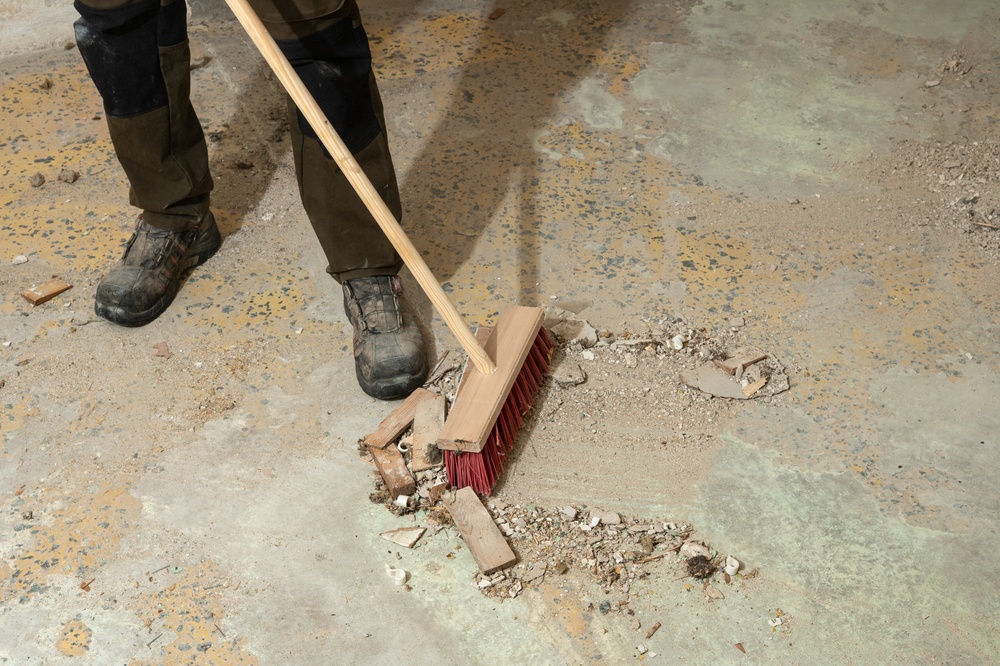
The rough clean is the foundational phase, typically occurring after the installation of drywall and before the application of final paint and delicate flooring. The objective is the removal of structural debris and the mitigation of large-scale dust accumulation.
In this phase, the intervention focuses on:
-
Removal of large-scale construction waste, including drywall offcuts, lumber scraps, and hardware packaging.
-
Industrial-grade vacuuming of subfloors to prevent debris from being trapped under final floor coverings.
-
Scraping of excess adhesives, caulk, and paint from surfaces that will later be covered or finished.
-
Initial cleaning of high-reach areas such as ceiling beams and ventilation duct exteriors.
Phase Two: The Final/Light Clean
Performed after all trades have finished their work, the final clean is the most intensive and visible phase. This stage is where the “spotless” reputation of a firm like Alberta Spotless Clean is established, focusing on the minute details that define a premium handover.
The scope of work in the final phase includes:
-
Intensive Particulate Removal: Every horizontal and vertical surface is wiped down, often multiple times, to eliminate the fine film of drywall dust that clings to walls and fixtures.
-
Wet Area Sanitization: Kitchens and bathrooms undergo a surgical level of cleaning. This includes scrubbing tile grout, polishing chrome fixtures, and ensuring that interior cabinetry is vacuumed and wiped clean.
-
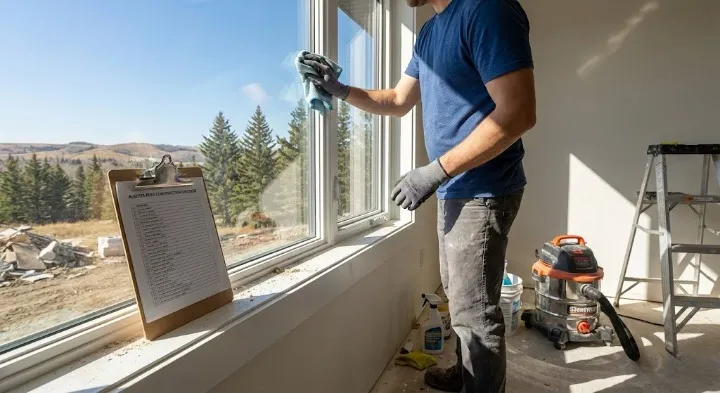
Window and Glass Detailing: Internal glass surfaces, mirrors, and sliding doors are cleaned of all stickers, silicone residue, and paint splatter.
-
Millwork and Cabinetry: Every drawer and shelf is opened and cleaned, ensuring that the “out of sight, out of mind” areas are as pristine as the visible surfaces.
Phase Three: The Touch-Up Clean
The touch-up clean is a brief but critical visit scheduled just before the tenant move-in or final real estate showing. Its purpose is to address “settled dust”—particles that were airborne during the final clean and have since landed on horizontal surfaces. This phase often includes a final buffing of floors and a re-wipe of countertops to ensure a mirror-like finish.
The Impact of Calgary’s Real Estate Boom on Cleaning Logistics
The current “boom and surge” in Calgary construction creates a unique set of logistical challenges for cleaning providers. The city’s push for higher density is best exemplified by the record-breaking pace of apartment and multi-unit housing starts in both the core and growing suburban areas.
Downtown Revitalization and Office Conversions
Calgary is currently a national leader in office-to-residential conversions. These projects are not only helping to reduce the downtown vacancy rate, which sat at approximately 30% in late 2025, but are also creating high-density cleaning needs in vertical environments.
| Building/Project Name | Address | Units Created | Cleaning Complexity Factor |
| 640 Fifth | 640 5 Ave S.W. | 262 |
High (High-rise logistics, elevator access) |
| Atrium I & II | 839 5 Ave S.W. | 180 |
High (Mixed commercial/residential footprint) |
| Transalta | 110 12 Ave S.W. | 153 |
Moderate (Beltline accessibility) |
| Eau Claire Residences | 17-story High-rise | 195 |
High (Urban core density, high-end finishes) |
| Joffre Place | 708 11 Ave S.W. | 119 |
Moderate (Beltline renovation) |
For firms operating in these environments, the logistics of garbage removal, equipment transport, and coordination with other active trades are as significant as the cleaning itself.
The Rise of New Suburban Communities
As residents move toward the periphery, new communities are being designed with “wellness” and “connection” at their core. These neighborhoods often feature larger homes with higher ceilings and open-plan designs, which influence the volume of work required.
-
Rangeview (SE): Inspired by Alberta’s agricultural heritage, this community features greenhouses and community gardens. Post-construction cleaning here must manage the transition between soil-rich outdoor environments and pristine interiors.
-
Glacier Ridge (NW): With over 10 km of trails and 6,000 planned homes, the scale of this development requires high-volume cleaning capacity that can maintain consistent standards across diverse housing types, from farmhouses to contemporary ranches.
-
Alpine Park (SW): This “urban village” emphasizes walkability and green corridors. The high-end finishes often found in southwest Calgary homes necessitate the use of specialized, non-abrasive cleaning techniques for stone and hardwood.
Technical Deep Dive: Equipment and Environmental Standards
The professional cleaning industry in 2026 has moved far beyond the “mop and bucket” era. To meet the rigorous health and safety standards of modern building codes and the expectations of eco-conscious clients, specialized equipment and protocols are mandatory.
HEPA Filtration and Air Quality
Drywall dust is not just a nuisance; it is a fine particulate that can irritate respiratory systems and damage sensitive HVAC components. In Alberta, where the long winter months mean residents spend the majority of their time indoors, air quality is a top priority. Professional companies like Alberta Spotless Clean utilize HEPA-filtered vacuums that trap 99.97% of particles down to 0.3 microns. This is essential for removing silica dust (from concrete) and sawdust (from millwork) that standard household vacuums would simply recirculate into the air.
Industrial-Strength Floor Maintenance
Newly installed flooring is one of the most significant investments in any construction project. Whether it is the polished concrete of a modern loft or the luxury vinyl plank (LVP) of a suburban townhouse, the cleaning process must be meticulous.
| Equipment Type | Function | Surface Application |
| Automatic Floor Scrubbers | Scrub, rinse, and dry in one pass |
Large tile, concrete, or vinyl areas |
| Low-Speed Buffers | Deep cleaning and stain removal |
Hardwood, high-traffic commercial tile |
| High-Speed Polishers | Restoring gloss and shine |
Retail, hospitality, and office lobbies |
| Steam Mops | Sanitization without chemicals |
Grout, sealed hardwood, ceramic tile |
The “Green Clean” Revolution in Alberta
Alberta’s businesses and homeowners are increasingly adopting eco-certified janitorial services, not just for the environmental benefit but for the long-term ROI on health and property care.
-
Eco-Certified Products: Using Green Seal or ECOLOGO certified products ensures that no toxic residues are left behind, which is vital in homes with children or pets and in healthcare cleaning Calgary settings.
-
Zero-VOC Cleaning: Volatile Organic Compounds can lead to “new building syndrome,” where chemical smells cause headaches or irritation. Zero-VOC protocols eliminate this risk, supporting workplace wellness and employee productivity.
-
Water-Saving Technologies: Modern scrubbers and steam cleaners use significantly less water than traditional methods, preventing the over-saturation of new wood floors and reducing the ecological footprint of the cleaning process.
Addressing the “Pain Points” of Post-Construction Cleaning
The journey from a “finished” build to a “liveable” space is often marred by common mistakes that can lead to costly delays or permanent property damage.
Mistake #1: Underestimating the Reach of Dust
Construction dust is insidious. It enters the HVAC system, settles on the tops of light fixtures, and migrates into the tracks of sliding doors. Professionals address this through a “top-down” approach, ensuring that gravity works with the cleaning process rather than against it.
Mistake #2: Improper Chemical and Tool Selection
Using a metal scraper on a tempered glass window or an acidic cleaner on a marble countertop can result in thousands of dollars in damages. Expert cleaners understand the chemistry of residues—whether it’s silicone, paint, or adhesive—and match it with the correct pH-neutral or specialized solvent.
Mistake #3: Rushing the Timeline
High-pressure deadlines often tempt contractors to clean while other trades are still finishing. This invariably leads to re-contamination. The most efficient projects allow for a clear “cleaning window” where no other work is performed, ensuring the “spotless” results that companies like Alberta Spotless Clean are known for.
Mistake #4: Ignoring Air Quality and Ductwork
Cleaning the surfaces is only half the battle. If the HVAC filters and ductwork are full of drywall dust, the first time the furnace kicks on, the house will be covered in a fine white film. Professional handover includes the replacement of all air filters and a thorough cleaning of vent covers.
Professional Add-Ons: Customizing the Clean
Beyond the standard interior scope, several specialized services are often required to bring a project to completion. These are priced as additional line items and allow for a fully customized handover package.
-
Exterior Window Washing: Prices range from $150 to $800+ depending on the height and complexity of the building. In Calgary, where window views are a major selling point in both the downtown core and the foothills, streak-free clarity is essential.
-
Carpet and Upholstery Detailing: Steam cleaning or hot-water extraction is used to remove embedded construction dust from newly installed carpets, typically costing $100 to $300+ depending on the number of rooms.
-
Pressure Washing: Vital for clearing sidewalks, driveways, and building exteriors of mud, concrete splatter, and construction grime. Costs typically range from $150 to $500.
-
Trash and Debris Hauling: While light trash removal is included in many packages, the hauling of half or full truckloads of construction debris can cost $300 to $1,000.
The Alberta Spotless Clean Advantage: Safety, Trust, and Quality
As an industry leader in Calgary, Alberta Spotless Clean differentiates itself through a commitment to “honest competitive pricing” and a rigorous focus on sector-specific protocols. Their services are designed to meet the unique requirements of various industries, from the high-sanitization needs of healthcare and banking to the high-aesthetic demands of restaurant and retail environments.
Unique Selling Propositions (USPs)
-
Eco-Friendly and Sustainable: Every project utilizes green-certified, non-toxic supplies, ensuring the space is safe for immediate occupancy by staff, patients, or families.
-
Licensed and Certified Staff: The team undergoes extensive background checks and certifications, providing peace of mind for high-security environments like banks and corporate offices.
-
24/7 Schedule Flexibility: Recognizing the tight deadlines of construction projects, services are available whenever is most convenient for the client, minimizing downtime and supporting a seamless transition to move-in.
-
Stringent Quality Control: Frequent inspections and a culture of customer feedback ensure that every square inch of a project meets the high standards of a “spotless” clean.
-
New Member Promotions: To support the growing Calgary community, Alberta Spotless Clean offers an exclusive 30% discount for new members, providing exceptional value for those entering the market or finishing a major project.
Strategic Outlook: The Future of Calgary’s Cleaning Industry
As we look toward the remainder of 2026 and into 2027, several trends will continue to shape the post-construction cleaning landscape in Calgary.
The Hybrid Work Influence
The “rationalization of space” resulting from mergers and acquisitions in the oil and gas sector (such as the Sunoco acquisition of Parkland or the CNRL acquisition of Chevron Canada) will continue to drive the need for office conversions and sublease prep. Cleaning companies must remain agile, providing on-demand services that cater to these rapidly shifting corporate real estate needs.
The Role of Technology and AI
By late 2026, the integration of AI-powered inspection tools and IoT sensors for air quality monitoring will become the standard for “marquee” sites. These technologies allow for performance-based contracts, where cleaning intensity is adjusted based on actual traffic and occupancy data, offering property managers a more efficient way to manage their budgets.
Continued Growth in “Garden-to-Table” Communities
Suburban developments like Rangeview and Seton Ridge will continue to set the bar for sustainable living. The cleaning industry will need to adapt to these “agrihoods” by offering services that support the unique maintenance requirements of homes that emphasize indoor-outdoor connectivity and local food production.
Conclusion: Securing the Handover with Excellence
In the competitive and rapidly evolving Calgary construction market of 2025-2026, post-construction cleaning is the bridge between a finished project and a functional, vibrant community. Whether it is repurposing a historic office tower in the downtown core or finalizing a sustainable home in a new suburban development, the quality of the cleaning handover is a direct reflection of the project’s overall value.
By understanding the tiered pricing structures—from the roughly $0.20 per square foot for initial debris removal to the $0.80 per square foot for specialized, medical-grade detailing—developers and homeowners can budget effectively for a successful transition. Partnering with a professional, eco-conscious firm like Alberta Spotless Clean ensures that this final, critical phase is handled with the expertise, technology, and care that the Calgary market demands. With the added incentive of a 30% discount for new members, there has never been a better time to prioritize the health, safety, and pristine presentation of Calgary’s newest residential and commercial spaces.
The success of a build is often judged by the details that remain after the dust has settled. In the city of Calgary, those details are best entrusted to the hands of experts who understand that a truly “spotless” finish is the ultimate hallmark of a project’s success.