Ultimate Winter Home Maintenance Checklist Alberta Guide
The climatic conditions of Alberta present a unique and rigorous set of challenges for residential infrastructure. Unlike temperate regions where winter maintenance is largely cosmetic or focuses on minor comfort adjustments, the Albertan context requires a fundamental operational shift to protect the structural integrity and mechanical viability of the home. The province’s climate is characterized not merely by low temperatures, which frequently descend below -30°C, but by extreme volatility. The interactions between Artic high-pressure systems and the unique orographic phenomena known as Chinooks create a dynamic thermal environment that subjects building materials to rapid expansion and contraction cycles.
This report serves as an exhaustive technical manual for homeowners, property managers, and facility operators. It moves beyond the superficiality of standard checklists to explore the building science, thermodynamic principles, and preventative engineering required to maintain the building envelope, mechanical systems, and interior environmental quality from early autumn through the spring thaw. The failure to adequately prepare a property for an Alberta winter is not a matter of discomfort; it is a financial and structural risk. Frozen pipes, ice dams, and furnace failures carry significant economic consequences and safety hazards.
By synthesizing data from meteorological studies, construction best practices, and insurance risk assessments, this document provides a chronological and technical roadmap for winter resilience. It draws parallels between residential needs and industrial standards—such as those found in office & Building cleaning services Calgary—to illustrate the universal principles of facility management in cold climates. Furthermore, it incorporates specific protocols for winter renovations, referencing the Post construction cleaning checklist Alberta to ensure indoor air quality is maintained when homes are sealed against the elements.
Section 1: The Meteorological and Physical Context of Alberta Winters
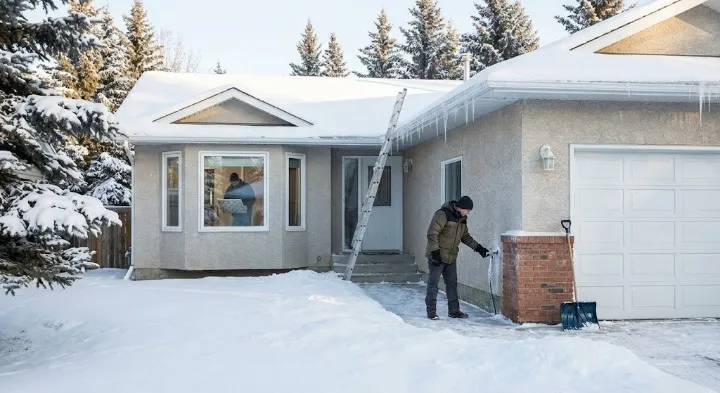
To implement an effective maintenance strategy, one must first understand the environmental forces at play. Alberta’s winter is defined by two opposing forces: the deep, sustained freeze of the Continental Arctic air mass and the rapid, warming influence of Pacific flows.
1.1 The Thermodynamics of the Chinook Wind
The most destructive force for building materials in Southern Alberta is the Chinook. These foehn winds occur when moist air from the Pacific is forced over the Rocky Mountains. As the air descends the eastern slopes, it warms rapidly due to adiabatic compression.
- Thermal Shock: Temperatures can rise from -20°C to +10°C in a matter of hours. This creates “thermal shock” in building materials. Vinyl siding, which has a high coefficient of thermal expansion, expands rapidly. If fastened too tightly, it buckles. If brittle from previous cold, it cracks.
- Freeze-Thaw Cycling: The rapid melt is followed by a return to freezing temperatures. Meltwater that has penetrated cracks in concrete driveways, stucco cladding, or asphalt shingles freezes and expands by approximately 9%. This hydraulic pressure causes spalling in masonry and delamination in roofing materials.
- Implication for Maintenance: Maintenance in Chinook zones (Calgary, Lethbridge) must prioritize flexibility and sealing. Rigid repairs often fail. Silicone-based caulking that remains flexible at low temperatures is essential to accommodate this movement.
1.2 The Deep Freeze and Frost Penetration
In Northern Alberta (Edmonton, Fort McMurray) and during non-Chinook periods in the south, the primary threat is sustained cold.
- The Frost Line: Prolonged sub-zero temperatures drive the frost line deep into the soil. In Alberta, water lines must be buried significantly deeper than in warmer climates to prevent freezing.
- Frost Heave: As soil water freezes, it forms ice lenses that lift the soil. This “frost heave” exerts tremendous upward force on decks, fence posts, and even shallow foundations. Differential movement between the frozen ground and the heated house foundation can sheer utility lines or crack drywall.
- Mitigation: The primary defense against frost heave is water management. By ensuring surface water drains away from the foundation before the freeze, the soil moisture content is reduced, limiting ice formation.
1.3 Humidity and Psychrometrics
Winter air in Alberta is exceptionally dry. Cold air holds very little moisture. When this air is brought inside and heated, its relative humidity (RH) drops to desert-like levels (often below 15%).
- Structural Damage: Extremely low RH causes hardwood floors to shrink and gap, drywall to crack, and wood framing to warp.
- Human Health: Low humidity dries out mucous membranes, increasing susceptibility to respiratory infections.
- Condensation Risks: Conversely, over-humidifying a home to compensate creates condensation on cold windows, leading to mold growth and rotting window sills. Balancing this psychrometric equation is a critical winter task.
Section 2: Building Envelope Integrity
The building envelope is the physical separator between the conditioned and unconditioned environment. It consists of the roof, walls, windows, doors, and foundation. Its integrity is the single most significant factor in energy efficiency and damage prevention.
2.1 Roofing Systems: The First Line of Defense
The roof endures the harshest conditions, bearing the weight of snow loads and the erosive force of wind.
2.1.1 Ice Damming: Mechanisms and Prevention
Ice dams are a pervasive issue in Alberta, causing water to back up under shingles and leak into wall cavities.
- The Mechanism: Ice dams are a symptom of a thermal bypass. Heat from the living space escapes into the attic due to poor insulation or air leaks. This warms the roof deck, melting the bottom layer of snow. The water runs down to the eaves, which are unheated and overhang the exterior walls. Here, the water refreezes, forming a dam.
- The Vicious Cycle: As the dam grows, it traps pools of water behind it. Shingles are designed to shed water, not hold standing water. The hydrostatic pressure forces water up under the shingles and through the nail holes.
- Prevention Protocol:
- Attic Bypass Sealing: The most effective prevention is sealing air leaks from the house into the attic. Common leakage points include attic hatches, pot lights, and plumbing stacks.
- Insulation Upgrade: Ensuring attic insulation meets or exceeds R-50 minimizes heat transfer.
- Ventilation: Soffit vents (intake) and roof vents (exhaust) must be clear to allow cold outside air to flush out any warm air that enters the attic, keeping the roof deck cold.
- Snow Removal: Using a roof rake to clear the bottom meter of snow removes the “fuel” for the ice dam.
2.1.2 Shingle and Flashing Maintenance
High winds, common in Southern Alberta, can lift shingles.
- Adhesion Failure: The sealant strip on shingles relies on solar heat to bond. If shingles are installed late in the season or if dust interferes with the bond, they may lift.
- Inspection: A pre-winter inspection should look for loose tabs, missing granules, and damaged flashing around chimneys and vents.
- Gutter Management: Gutters (eavestroughs) must be cleaned of leaves and pine needles before the freeze. Clogged gutters prevent snowmelt from draining, instantly creating an ice dam foundation.
2.2 Fenestration: Windows and Doors
Windows are thermal holes in the building envelope. Even high-end triple-pane windows have an insulating value (R-value) of roughly R-5 to R-8, compared to R-20+ for walls.
2.2.1 Draft Detection Methodologies
Locating air leaks is critical for comfort and energy conservation.
- The Candle/Incense Test: On a windy day, move a lit candle or incense stick around the perimeter of windows and doors. A flickering flame or drifting smoke indicates air infiltration.
- The Paper Test: Close a window or door on a piece of paper. If you can pull the paper out without tearing it, the seal is too loose.
- Thermal Imaging: Using an infrared camera (often rentable) provides a precise visualization of thermal bridges and air leaks.
2.2.2 Sealing and Insulation Techniques
- Caulking: Exterior gaps between the window frame and the siding must be sealed with high-quality exterior caulk. This prevents wind-driven snow from entering the wall assembly.
- Weatherstripping: Replace worn pile or foam weatherstripping on sliding sashes and door sweeps. These components degrade over time due to friction.
- Window Film: For older windows with poor thermal performance, applying shrink-wrap plastic film creates a dead air space that acts as an additional glazing layer. This is a highly effective, low-cost retrofit for the heating season.
2.3 Siding and Cladding
The exterior skin of the house protects the framing and insulation.
- Vinyl Siding: Inspect for cracks or loose panels. The interlocking mechanism can un-zip in high winds if not properly engaged.
- Stucco: Look for hairline cracks. While small, these can admit water which freezes and widens the crack (spalling). Seal with a masonry-compatible sealant.
- Pest Exclusion: Check for gaps where mice might enter. A mouse needs only a 1/4 inch gap. Steel wool and foam are effective barriers.
Section 3: Plumbing and Water Management Systems
Water damage from frozen pipes is one of the most common and expensive insurance claims in Alberta. The physics of freezing water involves a phase change that exerts over 2000 psi of pressure, easily rupturing copper, PVC, and even PEX piping.
3.1 Exterior Hose Bibs (Faucets)
The “garden hose” error is the leading cause of early winter plumbing failures.
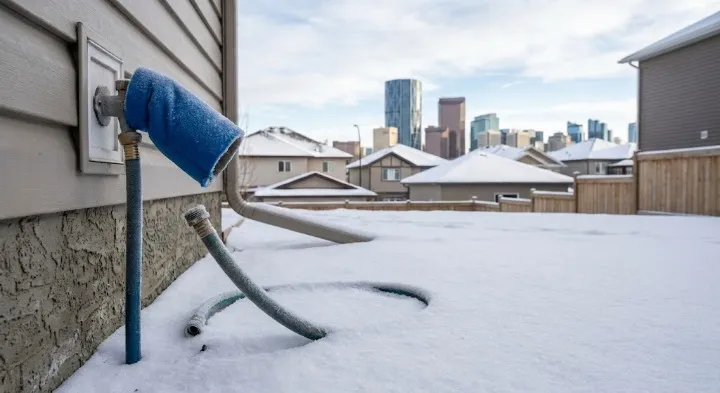
- The Failure Mode: If a hose is left attached, water cannot drain from the faucet spigot. Even “frost-free” sillcocks will freeze if the hose traps water inside the barrel. The ice expands backward into the house, splitting the pipe inside the wall cavity. The leak typically does not manifest until the pipe thaws.
- Winterization Protocol:
- Disconnect: Remove all hoses, splitters, and timers.
- Isolate: Shut off the water supply to the exterior line using the internal shut-off valve.
- Drain: Open the exterior faucet to drain the remaining water from the line. Leave the faucet open (if isolated) or closed (if frost-free and drained).
- Insulate: Install a foam faucet cover for an added layer of thermal protection.
3.2 Sump Pump Systems
The sump pump is a critical flood prevention device, active during spring melt and mid-winter Chinooks.
- Discharge Line Freezing: If the discharge pipe lays flat on the ground outside, water pools and freezes. Subsequent pump cycles are blocked by this ice plug. The pump runs continuously against the blockage, eventually burning out the motor or causing the sump pit to overflow into the basement.
- Mitigation Strategy:
- Remove Extensions: Disconnect the flexible lay-flat hose used in summer.
- Rigid Piping: Install a rigid PVC pipe that slopes aggressively away from the foundation. The water must exit with velocity and not pool.
- Air Gap: Ensure there is an air gap at the discharge point from the house. If the line freezes underground, the water can overflow at the air gap outside rather than backing up inside.
- Heat Tracing: In high-risk areas, install a self-regulating heating cable (like the Heat-Line system) inside the discharge pipe to maintain a flow channel.
3.3 Interior Pipe Protection
Pipes running through unheated spaces (garages, crawl spaces, cantilevers) are vulnerable.
- Insulation: Apply foam pipe sleeves to all accessible pipes in cool areas. This delays freezing but does not prevent it if flow stops for long periods.
- Circulation: During extreme cold snaps (-30°C or lower), open cabinet doors under kitchen and bathroom sinks to allow warm room air to circulate around the pipes.
- The Drip Technique: Allow a faucet to drip slightly. Friction from flowing water and the constant replenishment of warmer water from the main prevents freezing. More importantly, an open faucet prevents pressure buildup if a freeze occurs elsewhere in the line.
Section 4: Heating, Ventilation, and Air Conditioning (HVAC)
The HVAC system is the life support system of the home. In Alberta, a furnace failure is a safety emergency.
4.1 Furnace Maintenance and Optimization
Modern high-efficiency furnaces (90%+ AFUE) are complex appliances with sensors and logic boards.
- Filtration: The most critical homeowner task is filter replacement. A clogged filter restricts airflow. This causes the heat exchanger to overheat, triggering the “High Limit Switch” to shut off the burners. It also strains the blower motor. Filters should be checked monthly.
- MERV Ratings: Avoid using filters with excessively high MERV ratings (e.g., MERV 13+) unless the ductwork is designed for it, as they restrict airflow too much. A MERV 8 changed frequently is often better for system health.
- Intake/Exhaust Vents: High-efficiency furnaces vent through PVC pipes on the side of the house. These must be kept clear of snowdrifts and hoarfrost. A blocked exhaust pipe will trigger a pressure switch error, shutting down the furnace.
- Professional Tune-Up: An annual inspection is vital. Technicians clean the flame sensor (a common cause of lockout), inspect the igniter, and check the heat exchanger for cracks—a critical safety check for Carbon Monoxide leaks.
4.2 Humidifiers and Indoor Air Quality
Maintaining humidity is essential for comfort and preserving wood finishes, but it is a delicate balance.
- Maintenance: The humidifier water panel (evaporator pad) accumulates mineral scale from Alberta’s hard water. It should be replaced annually.
- Cleaning: The unit should be disassembled and cleaned with a vinegar-water solution to dissolve calcium deposits and kill bacteria.
- The “Window Test”: If windows have condensation or ice on the bottom corners, the humidity is too high. The humidistat must be lowered as the outdoor temperature drops.
- Rule of Thumb:
- 0°C to -10°C: Set to 35%
- -10°C to -20°C: Set to 25%
- Below -20°C: Set to 15%.
- Rule of Thumb:
4.3 Heat Recovery Ventilators (HRV)
HRVs are standard in newer, airtight homes. They exchange stale indoor air for fresh outdoor air, recovering heat in the process.
- Core Freezing: In extreme cold, the HRV core can freeze up. Modern units have defrost cycles, but the core should be removed and washed (in a shower) seasonally to maintain efficiency.
- Filter Cleaning: The small foam filters inside the HRV intake ports need vacuuming or washing every 3 months to ensure proper airflow.
Section 5: Safety and Emergency Preparedness
When infrastructure fails, the home environment can become hazardous within hours.
5.1 Carbon Monoxide (CO) Safety
CO is an odorless, colorless gas produced by incomplete combustion in furnaces, water heaters, and fireplaces. Winter is the peak season for CO poisoning.
- Detectors: CO detectors must be installed on every sleeping level and tested monthly. They have a lifespan (typically 7-10 years) and must be replaced when expired.
- Source Management: Never idle vehicles in an attached garage, even with the door open. Ensure furnace and water heater vents are not blocked by snow.
5.2 Fire Prevention
- Chimney Maintenance: Creosote, a byproduct of burning wood, accumulates in chimneys and is highly flammable. An annual sweep is required for wood-burning fireplaces.
- Spark Arrestors: Chimney caps must have screens to prevent embers from landing on the roof and to keep animals out.
- Space Heaters: Electric space heaters are a common cause of winter fires. They must be plugged directly into wall outlets (not extension cords) and kept 3 feet away from combustibles.
5.3 The 72-Hour Emergency Kit
Power outages during blizzards can isolate neighborhoods. Every home requires a kit to sustain the household for 3 days.
- Water: 4 liters per person per day.
- Food: Non-perishable, ready-to-eat items (canned goods, energy bars).
- Heat: Sleeping bags, wool blankets, Mylar emergency blankets, hand warmers.
- Light/Comms: Flashlights (LED), extra batteries, crank-powered radio, portable power banks for phones.
- First Aid: Essential medications, bandages, antiseptics.
Section 6: Exterior Infrastructure and Landscaping
The exterior of the property requires preparation to withstand frost heave and snow load.
6.1 Concrete and Pavement Preservation
- Sealing: Concrete is porous. Water absorption followed by freezing causes surface spalling. Applying a penetrating sealer in the fall prevents water ingress.
- Crack Repair: Existing cracks should be filled with flexible masonry sealant to prevent ice wedging, which widens the crack.
- Salt Management: Avoid using rock salt on concrete less than a year old. Use sand or kitty litter for traction to avoid chemical damage to the cement paste.
6.2 Landscaping and Arboriculture
- Tree Pruning: Heavy wet snow can snap tree limbs, threatening power lines and roofs. Pruning dead or overhanging branches in the fall reduces this risk.
- Drainage: Ensure downspout extensions direct water at least 2 meters away from the foundation. This prevents water from saturating the soil near the footing, reducing the risk of frost heave and basement leaks.
6.3 Deck and Patio Furniture
- Storage: Patio furniture should be covered or moved to storage. The freeze-thaw cycle can crack plastic and rust metal.
- Deck Clearance: Shoveling snow off wooden decks prevents moisture damage, but use a plastic shovel to avoid gouging the wood or composite material.
Section 7: Interior Environmental Quality
Winter maintenance is also about maintaining a healthy interior environment while the house is sealed shut.
7.1 Deep Cleaning: The “Warehouse” Standard
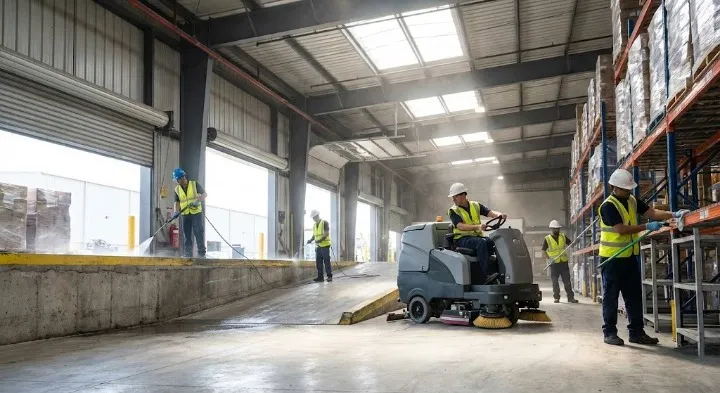
In winter, homes are closed systems. Dust, skin cells, and pet dander accumulate. We can draw a parallel here to industrial maintenance. Warehouse cleaning services Calgary often involve “high dusting”—cleaning trusses, pipes, and lighting fixtures where dust settles and eventually impacts air quality.
- Residential Application: Homeowners should adopt this “high dusting” approach in winter. Clean the tops of cabinets, ceiling fan blades, and door frames. This dust is often circulated by the furnace fan.
- The Principle: Just as a warehouse requires deep cleaning to protect inventory and worker health, a home requires it to protect respiratory health during the months when windows cannot be opened.
7.2 Winter Renovations: Managing Dust in a Sealed Box
Winter is a popular time for interior renovations (basement finishing, kitchen remodels). However, the inability to ventilate naturally creates a dust hazard.
- Containment: The Post construction cleaning checklist Alberta emphasizes the need for containment. When renovating in winter, seal the work area with plastic barriers.
- Vent Protection: Isolate cold air return vents in the renovation zone. If these suck in drywall dust, it will foul the furnace filter and blower motor immediately.
- Air Scrubbing: Use portable HEPA air scrubbers to capture airborne dust, as you cannot rely on cross-ventilation.
- Fine Dust Removal: Post-renovation, silica dust settles in grout lines and texture. Specialized cleaning involving HEPA vacuuming and wet extraction is necessary to remove this health hazard.
Section 8: Garage and Storage Organization
The garage is a transition zone that faces specific winter challenges.
8.1 Chemical and Fluid Management
- Freezing Hazards: Many liquids stored in garages (latex paint, pressure washer pumps, liquid fertilizers) will freeze and be destroyed. Move these to the basement.
- Organization: Rotate stock. Move winter gear (shovels, ice melt, snow tires) to the front. Store summer gear (bikes, lawnmower) overhead or in the back.
8.2 Floor Protection
- Slush Management: Vehicles drag in “snirt” (snow and dirt) mixed with road salts. This brine eats into the garage floor. Installing containment mats prevents this salty water from migrating to the walls or damaging stored items.
Section 9: Commercial vs. Residential Snow Removal Standards
Understanding the difference between residential and commercial standards helps in managing expectations and liability.
- Residential: The focus is on access and basic safety. Liability is generally lower, though homeowners are responsible for municipal sidewalks.
- Commercial: Warehouse cleaning services Calgary often include exterior lot maintenance. The standard here is “bare pavement” to prevent slip-and-fall liability and ensure forklift/truck access. This requires heavy equipment and aggressive salting.
- Takeaway: Homeowners with steep driveways or high liability concerns may consider hiring professionals who use commercial-grade brine sprays or sanders, rather than relying solely on a shovel.
Section 10: Conclusion
The maintenance of a home in Alberta during winter is not a passive activity. It requires active engagement with the property and an understanding of the physical forces at play. The distinction between a home that survives winter and one that thrives lies in the details: the sealed air leak, the drained hose bib, the clean furnace filter, and the correctly graded downspout.
By following this comprehensive guide, homeowners can mitigate the risks of the extreme climate, ensuring their home remains a safe, warm, and efficient sanctuary against the cold. The integration of rigorous standards—borrowed from commercial and post-construction protocols—elevates maintenance from a chore to a strategic asset management practice.